



Explore the origins, meaning and cultural significance of hot cross buns—and discover where to buy the best ones in India this Easter.
When Easter approaches, the table begins to take on a familiar rhythm—hard-boiled eggs, glazed ham, and rows of chocolate eggs wrapped in pastel foil. But among all of these, one offering carries a quiet, almost nostalgic authority: the hot cross bun. Soft, spiced, and marked with its unmistakable cross, it is less a pastry and more a ritual—one that has travelled centuries to arrive, still warm, on our plates.
Growing up in Calcutta, the arrival of hot cross buns always felt like a moment I waited for. The instant they appeared on shelves at Flurys, my parents would bring home neatly packed boxes, their sweet, yeasty, gently spiced fragrance filling the room even before they were opened. It was only later, during my years in a convent school, that I began to understand the tradition and meaning behind this seasonal indulgence.
What Exactly Is a Hot Cross Bun?
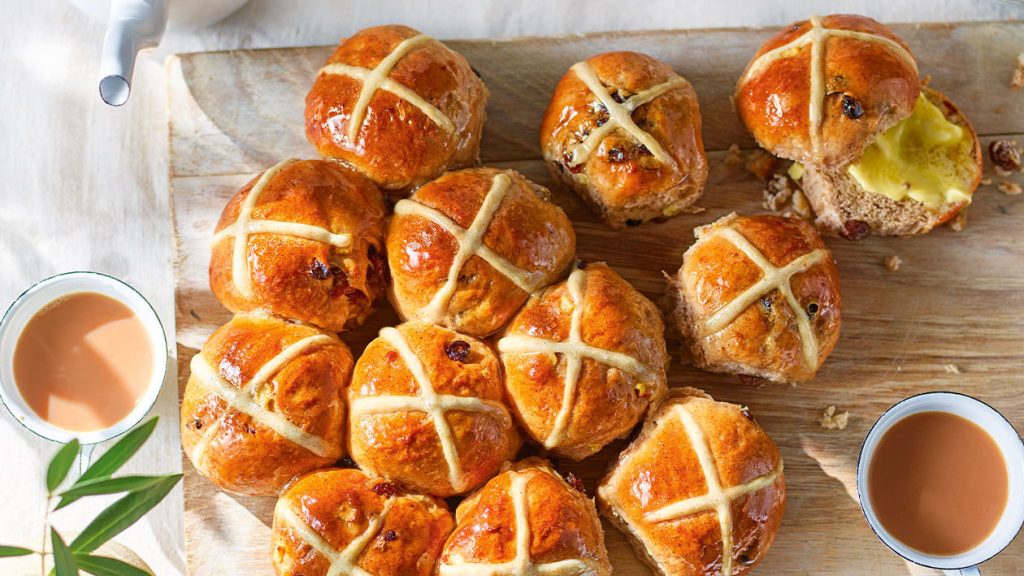
At its core, a traditional hot cross bun is deceptively simple—a lightly sweetened, yeasted bun, perfumed with warm spices and studded with raisins or currants. Across its top sits its defining mark: a cross, either etched into the dough or piped in icing after baking. Today, these buns are found year-round in bakeries, often reimagined with chocolate or citrus. But once, they belonged strictly to a single, sacred moment—Good Friday. Eaten as a symbolic marker of the end of Lent, the cross represents the crucifixion of Jesus Christ, while the buns themselves carry deeper meaning: the spices are believed to echo those used in Christ’s embalming, and the rich, dairy-based dough reflects a return to indulgence after weeks of Lenten fasting, when such ingredients were traditionally forbidden.
A Tradition Rooted in Faith
Why, then, do we eat hot cross buns at Easter? The answer, like many enduring traditions, is not singular. Instead, it unfolds through a series of stories—part history, part folklore, and part faith.
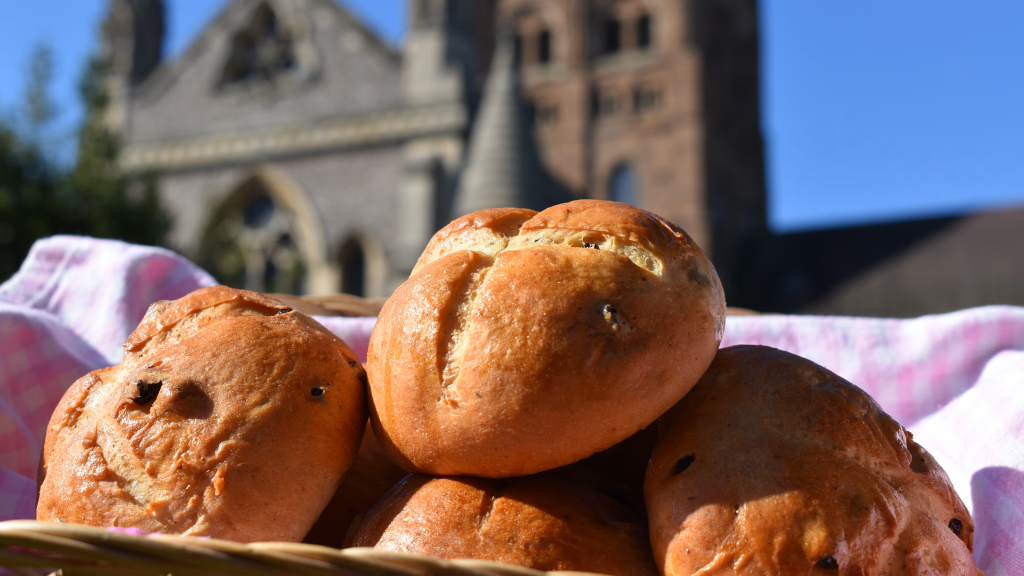
One of the earliest origin stories traces the bun back to the 12th century. According to this account, an Anglican monk baked these spiced buns and marked them with a cross to honour Good Friday. Over time, what began as a symbolic gesture gained traction, transforming the buns into an edible emblem of the Easter weekend. The cross itself came to represent the crucifixion, giving the bun a meaning that extended far beyond its ingredients.
When England Turned the Bun into Tradition
Centuries later, in Elizabethan England, the bun found itself at the centre of both devotion and regulation. Toward the end of the 16th century, Queen Elizabeth I is said to have restricted the sale of sweet buns, allowing them to be sold only during funerals, Christmas, and the Friday before Easter.
The reasoning was rooted in widespread superstition. People believed these buns possessed medicinal or even magical properties—qualities that, if misused, could be dangerous.
Yet, as with most attempts to legislate tradition, the outcome was quite the opposite. Instead of diminishing their presence, the restrictions pushed people into their own kitchens. Home baking surged, and with it, the popularity of the buns. Eventually, enforcing the law became impractical, and it was quietly abandoned.
The Superstitions That Shaped the Bun
Beyond history lies an even more fascinating layer: superstition. For many, hot cross buns were not merely food—they were talismans.
One belief held that buns baked on Good Friday would never go stale, as though time itself paused in reverence. Another suggested that hanging a bun in the rafters of a home would protect it from evil spirits for the year ahead.
Sailors, too, found comfort in these humble buns. It was said that carrying one on a voyage could shield a ship from wreckage. And perhaps most charming of all was the idea that sharing a hot cross bun with someone ensured friendship in the coming year—a simple act of breaking bread elevated into a promise of connection.
Where to Find the Best Hot Cross Buns in India
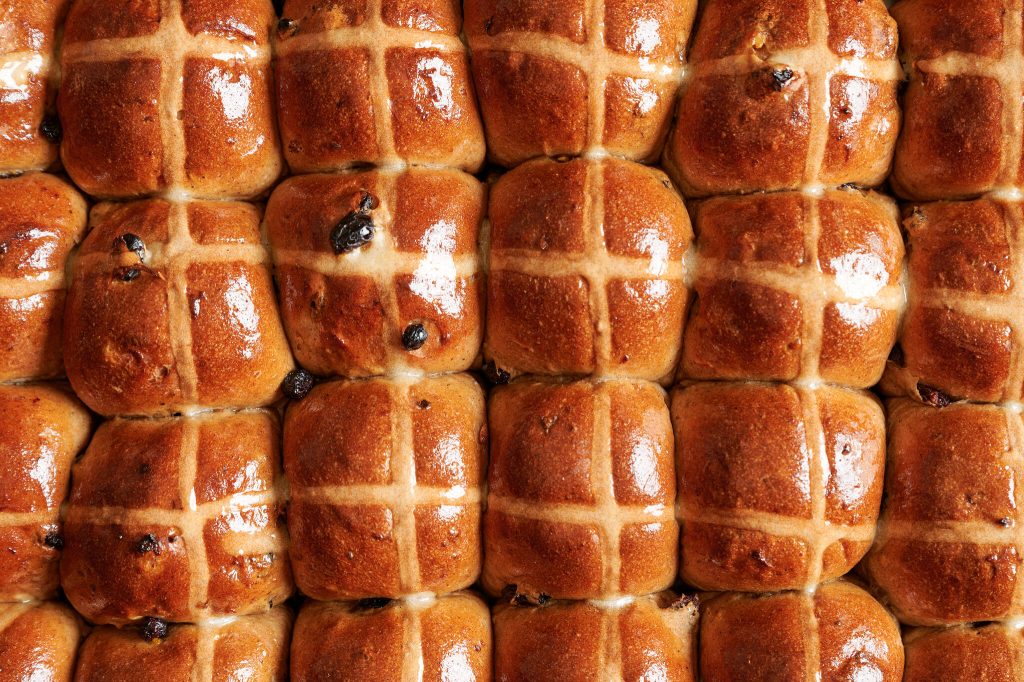
Across India, the search for the perfect hot cross bun feels less like a purchase and more like a ritual—part nostalgia, part quiet pilgrimage. In Kolkata, the trail still begins at Flurys—not just the Park Street institution, but a brand that now spans Kolkata, New Delhi, Mumbai and other Indian cities, carrying its Easter classics far beyond the city that made them iconic. Then there’s Nahoum & Sons in New Market, where generations have marked Easter with buns, eggs, and marzipan steeped in legacy. Kookie Jar, with its loyal following, completes the city’s essential circuit.
In Mumbai, the experience shifts, but the sentiment remains. The old-world charm of American Express Bakery sits alongside the widespread familiarity of Theobroma—its pan-India presence making it one of the easiest ways to access the season’s most recognisable indulgence.
Beyond these cities, the rule is simple and almost instinctive: follow memory. In Delhi, Bangalore, Goa—or anywhere else—the finest hot cross buns are rarely found on curated lists. They live instead in the city’s oldest bakeries, in heritage confectioners and family-run kitchens, where Easter is not a trend but a tradition that returns, year after year, exactly as it should.
For latest travel news and updates, food and drink journeys, restaurant features, and more, like us on Facebook or follow us on Instagram. Read more on Travel and Food Network

A New Yorker at heart, an unapologetic anglophile, national parks explorer and former head of National Geographic publishing in India, Ritika is the Global Editor for Travel and Food Network and leads all journalism across platforms, including news, digital, videos, and social media. She writes features focused on narrative storytelling, industry trends, destinations, culinary travel, and how-to advice and is an advocate for sustainable travel. You can follow her on Instagram @newyorkeratheart