
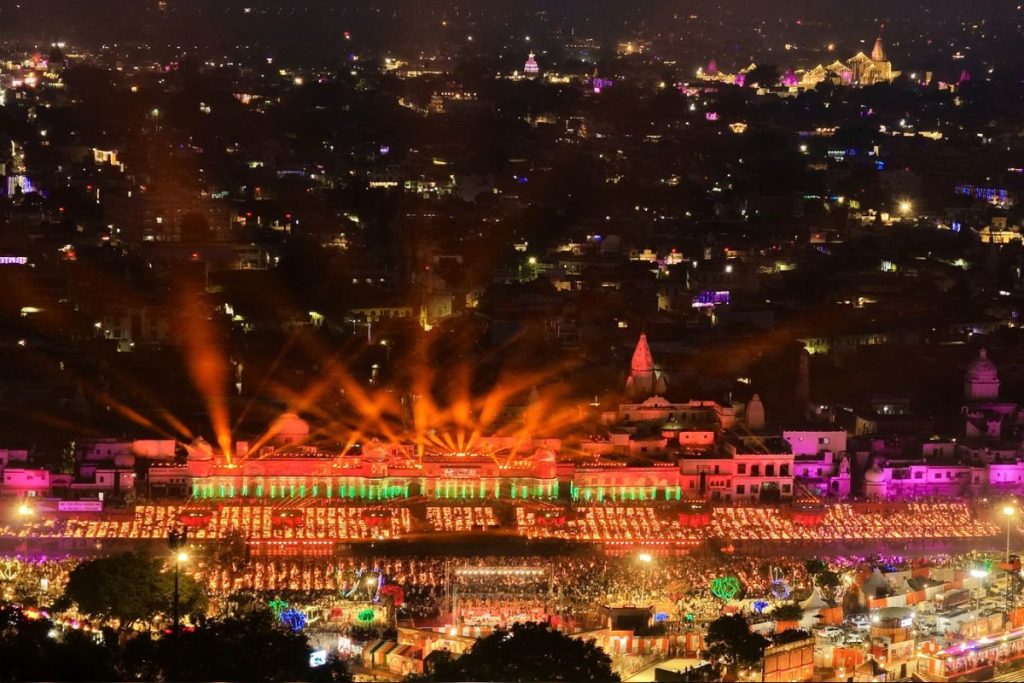
In a major international honour, UNESCO has added Deepavali to its Intangible Cultural Heritage List, acknowledging the festival’s enduring cultural, spiritual and social significance.
Deepavali—India’s spellbinding festival of lights—has now taken its place on UNESCO’s Representative List of the Intangible Cultural Heritage of Humanity, joining a select circle of cultural treasures recognised in the 2025 edition.

Created to spotlight and safeguard the world’s most meaningful living traditions, UNESCO’s list honours rituals, crafts and celebrations that define a community’s identity and spirit.
This year, alongside India’s luminous Deepavali, the exquisite Tangail handloom weaving tradition also earned its own rightful spot, shining a light on the artistry and cultural legacy of the region.
What is UNESCO’s Representative List of the Intangible Cultural Heritage of Humanity?
UNESCO’s Representative List celebrates the world’s living cultural traditions — the practices, rituals, and artistic expressions that define how communities understand themselves. As the organisation notes, cultural heritage isn’t limited to monuments or museum pieces; it also lives in stories whispered across generations, in performing arts, in everyday social customs, in seasonal festivals, and in the skills required to create traditional crafts.
This form of heritage is at once ancient and evolving — timeless, yet continually shaped by the people who keep it alive. It is inclusive by nature, rooted in community, and reflective of the rich diversity that persists even in an increasingly globalised world. By recognising these traditions, UNESCO aims to strengthen cultural identity, encourage cross-cultural understanding, and nurture respect for the many ways people celebrate life across the planet.
Which of India’s cultural heritages are on this list?
With Deepavali’s new inscription, India now has 16 cultural treasures represented on UNESCO’s Intangible Heritage list. Together, they map a vivid cultural atlas — from sacred chants in the Himalayas to vibrant festival rituals in the east and storytelling traditions in the south. India’s existing entries include:
- Nowruz — 2024
- Garba (Gujarat) — 2023
- Durga Puja (Kolkata) — 2021
- Kumbh Mela — 2017
- Yoga — 2016
- Traditional brass and copper utensil-making of the Thatheras of Jandiala Guru (Punjab) — 2014
- Sankirtana, the ritual singing, drumming and dancing of Manipur — 2013
- Buddhist chanting of Ladakh — 2012
- Chhau dance — 2010
- Kalbelia folk songs and dances of Rajasthan — 2010
- Mudiyettu, ritual theatre and dance drama of Kerala — 2010
- Ramman, a religious festival and ritual theatre of the Garhwal Himalayas — 2009
- Kutiyattam, Sanskrit theatre — 2008
- Ramlila, the traditional performance of the Ramayana — 2008
- Tradition of Vedic chanting — 2008
Each inscription is a reminder that India’s cultural heartbeat lies not just in ancient monuments, but in the living traditions that continue to evolve — and enchant — generation after generation.
Here’s a full Representative List of the Intangible Cultural Heritage of Humanity 2025
- Amateur theatre acting in Czechia | Czechia
- Bagpipes and bagpipe playing in Bulgaria: transmission of knowledge and skills | Bulgaria3
- Behzad’s style of miniature art | Afghanistan
- Bisht (men’s Abaa): skills and practices | Qatar – Bahrain – Iraq – Jordan – Kuwait – Oman – Saudi Arabia – Syrian Arab Republic – United Arab Emirates
- Brussels’ rod marionette tradition | Belgium
- Christmas Bram and Sambai of Gales Point Manatee, Belize | Belize
- Commandaria wine | Cyprus
- Cuarteto: music, dance and lyrics in the city of Córdoba, Argentina | Argentina
- Deepavali | India
- Family tradition circus in Chile | Chile
- Festivity of the Virgen of Guadalupe – Patroness of Sucre | Bolivia (Plurinational State of)
- Gifaataa, Wolaita people New Year festival | Ethiopia
- Guruna, a practice of pastoral, socio-cultural and artistic retreats centered on livestock among the Massa | Chad – Cameroon
- Hadrami Dan gathering | YemenJoropo in Venezuela | Venezuela (Bolivarian Republic of)
- Koshary, daily life dish and practices associated with it | Egypt
- Mvet Oyeng, musical art, practices and skills associated with the Ekang community | Gabon – Cameroon – Congo
- The Confraternity of flowers and palms | El Salvador
- The practice of Cuban Son | Cuba
- The zaffa in the traditional wedding | Djibouti – Comoros – United Arab Emirates – Iraq – Jordan – Mauritania – Somalia
- Traditional Saree weaving art of Tangail | Bangladesh