



Best Things to Do in Casablanca, Morocco: Luxury Hotels, Top Restaurants, Iconic Attractions & Hidden Gems
Long before my flight descended over Morocco’s Atlantic coast, Casablanca already existed in my imagination—not as a destination, but as a mood. Black-and-white shadows. Parisian-style al fresco cafés. A piano playing softly in the background. Somewhere, Humphrey Bogart and Ingrid Bergman, in the 1942 Hollywood classic Casablanca, were saying their unforgettable goodbye beneath the glow of an airport runway that never actually belonged to Casablanca.
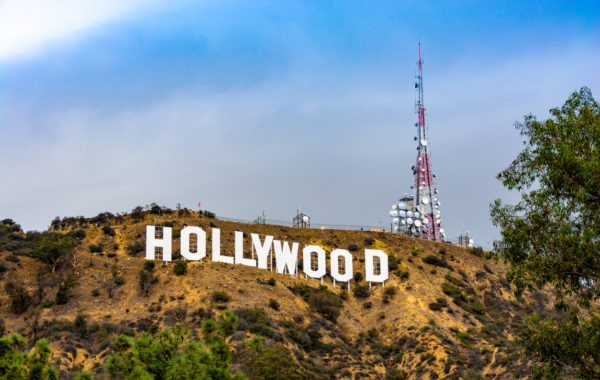
That is the peculiar burden this city has carried for more than eight decades. The film created one of cinema’s greatest romances, yet not a single scene was filmed here. The Casablanca the world fell in love with was recreated at Warner Bros. Studios in California, leaving the real city to live in the shadow of a beautifully crafted illusion.
Perhaps that is why Casablanca has so often been misunderstood. Overshadowed by the timeless appeal of Fes, Marrakech and Tangier, Morocco’s largest city is frequently dismissed as little more than a gateway.
Casablanca is a city shaped as much by reinvention as by history. After the earthquake of 1755 reduced much of it to ruins, Sultan Mohammed ben Abdallah rebuilt the settlement that became modern Casablanca. Originally known as Dar al-Baida (The White House) —its name would later evolve into the Casablanca that has captured imaginations ever since.
With just 24 hours to explore, I arrived determined to leave the movie behind and discover Casablanca on its own terms. What I found was quieter, more sophisticated and, in many ways, far more rewarding—a city where Art Deco boulevards meet the Atlantic Ocean, grand French architecture stands beside one of the world’s most magnificent mosques, and Morocco’s commercial heart reveals an understated confidence to those willing to look beyond the legend.
THINGS TO SEE & DO IN MOROCCO
1. Hassan II Mosque
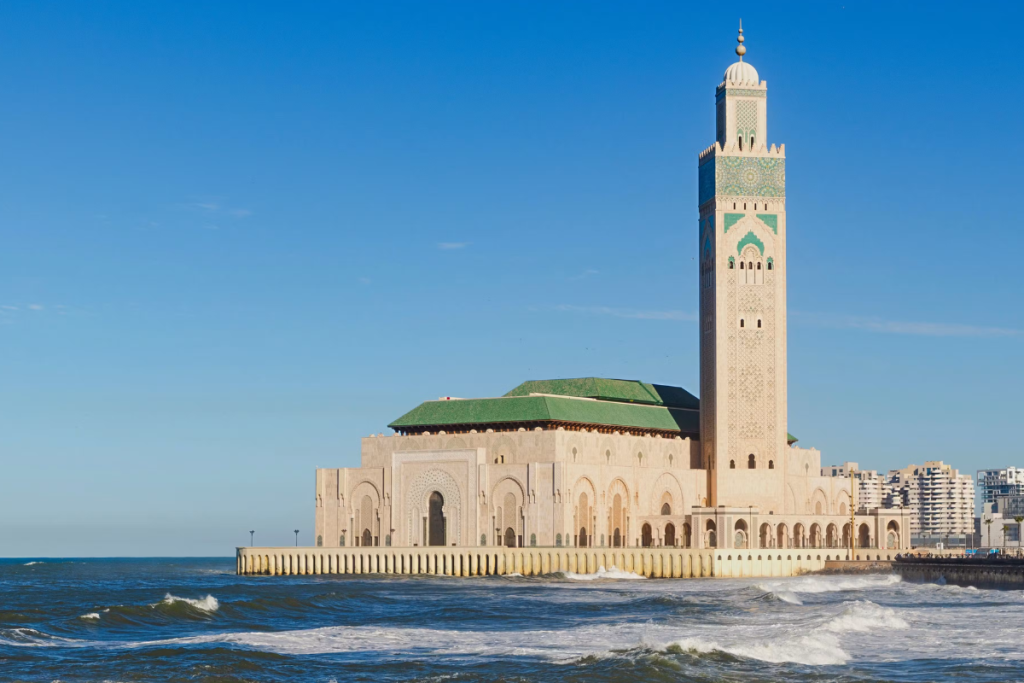
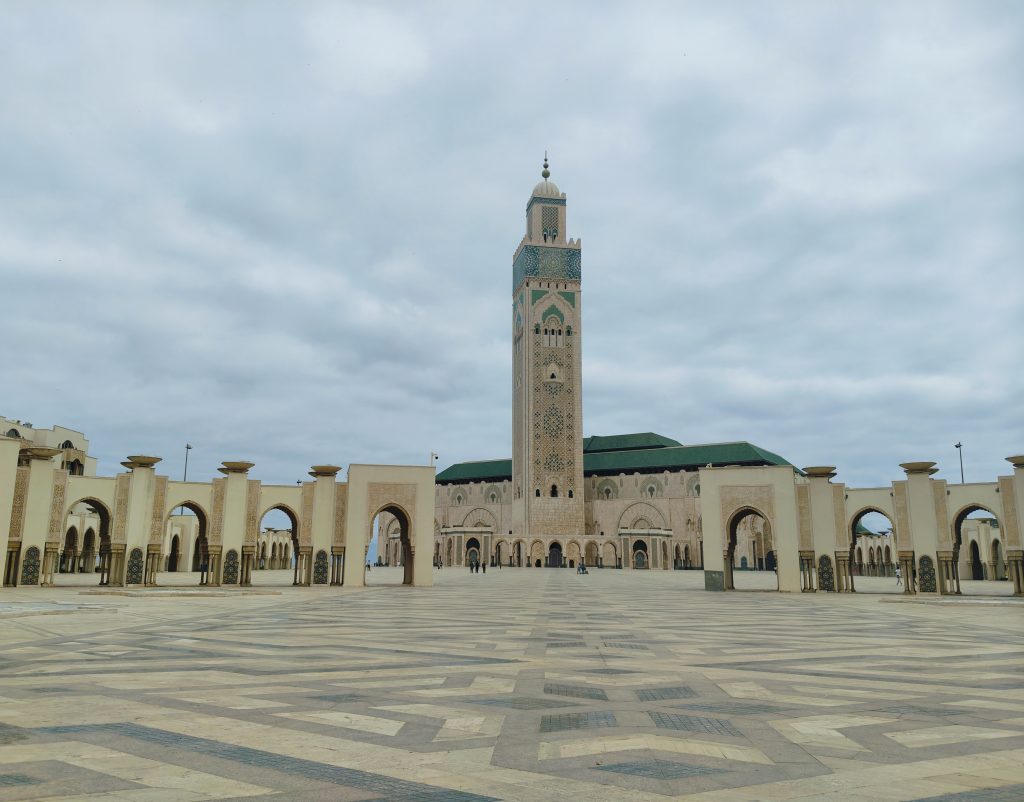
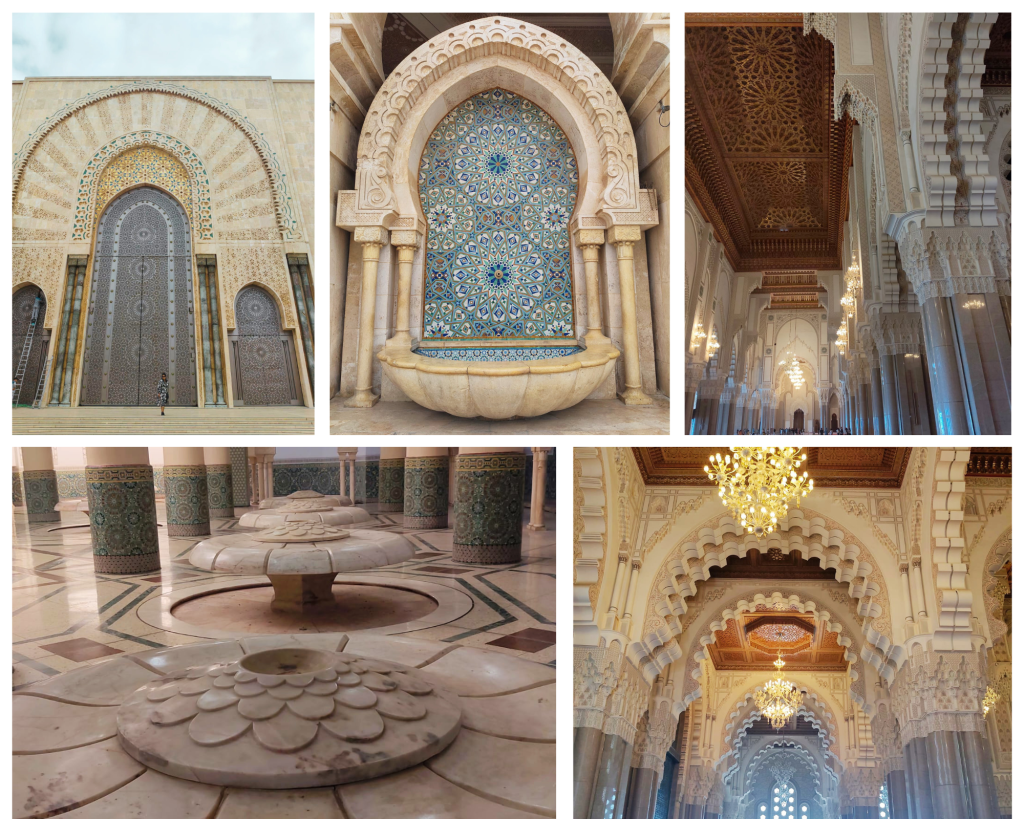
Dominating Casablanca’s skyline, the Hassan II Mosque is not only Morocco’s most iconic landmark but also the third-largest mosque in the world. Perched dramatically on the edge of the Atlantic Ocean, it forms a spectacular bridge between the city’s historic quarters and its modern waterfront. Its soaring 210-metre minaret—one of the tallest religious structures on Earth—has long served as a landmark for both worshippers and ships approaching Casablanca’s harbour. One of the few mosques in Morocco open to non-Muslim visitors, guided tours reveal an interior of breathtaking craftsmanship. Fragrant cedarwood from the Atlas Mountains, hand-carved marble, intricate zellij mosaics, soaring Murano glass chandeliers and finely sculpted ceilings come together in a masterpiece of Moroccan artistry. Beneath the main prayer hall, the vast marble ablutions chamber, with its elegant lotus-shaped fountains, is equally captivating. If you’re visiting on a clear Friday, don’t miss the mosque’s “Gate of Heaven”—a remarkable retractable roof that opens to the sky, filling the prayer hall with natural light. Beneath the mosque lies a 6,000-square-metre royal hammam, once reserved for Morocco’s elite and now welcoming visitors in separate facilities for men and women.
2. Quartier Habous
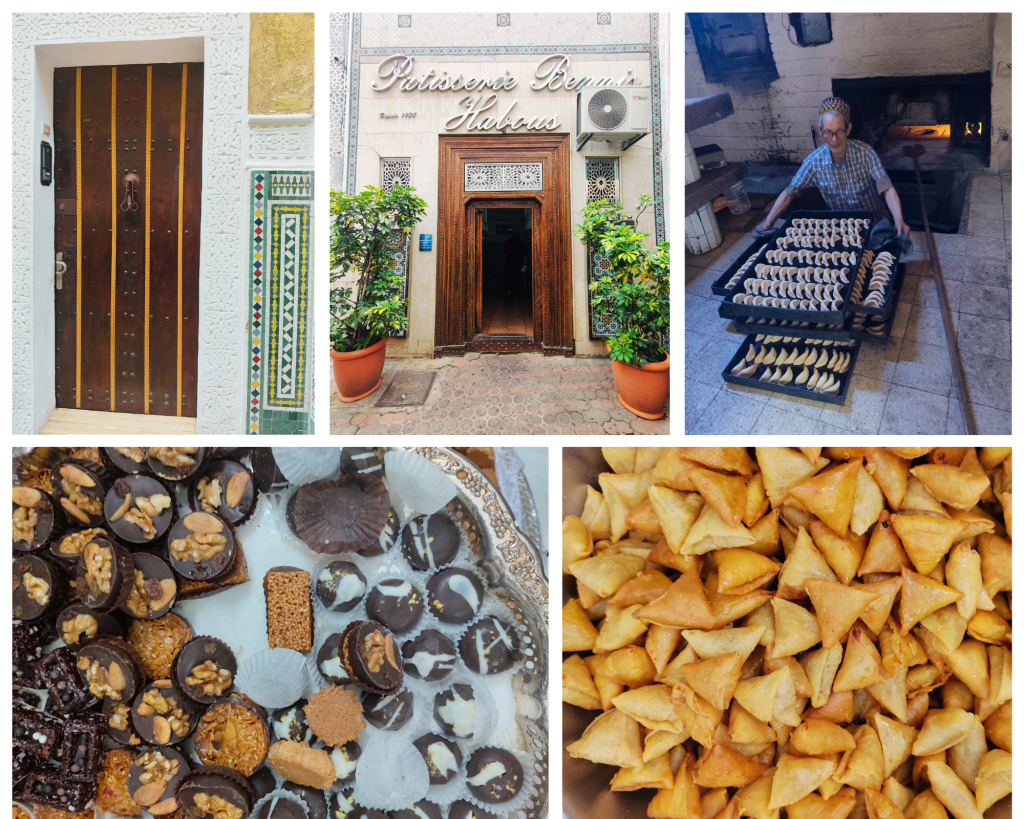
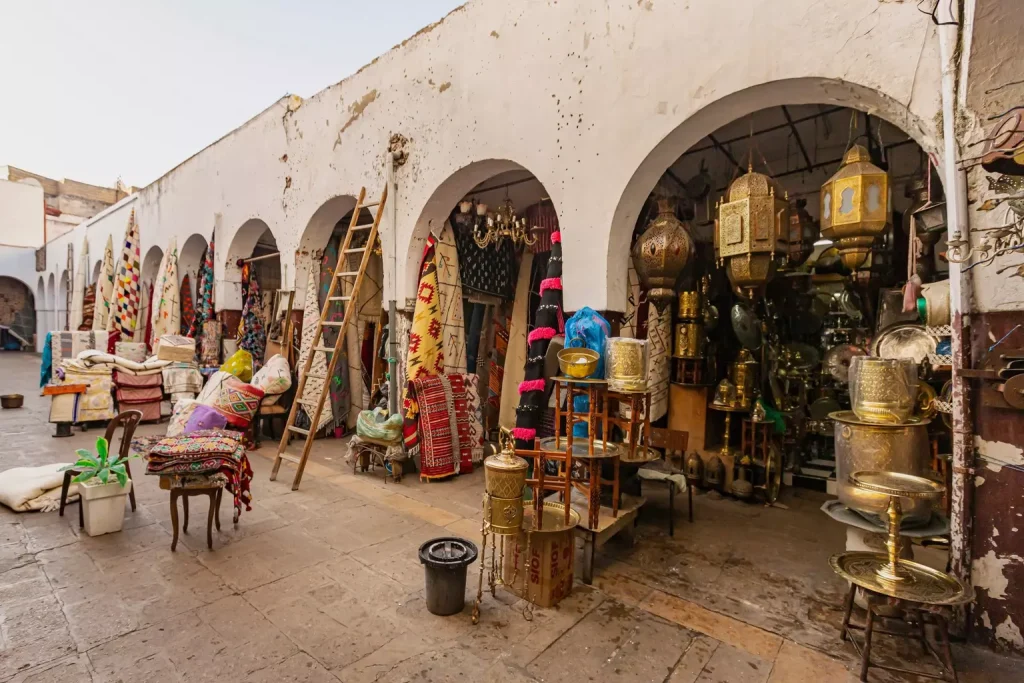
Built in the 1930s, Quartier Habous, also known as the New Medina, was conceived by the French Protectorate to ease the city’s growing housing pressures. Today, it is one of Casablanca’s most charming quarters, where elegant European planning meets timeless Moroccan craftsmanship. Near the Royal Palace, its arcaded streets and shaded alleyways are lined with artisans selling everything from polished brassware, handwoven rugs, leather goods, and ceramics to fragrant spices, olive oil, harissa (North Africa chili paste). No visit is complete without a stop at the legendary Pâtisserie Bennis, a Casablanca institution for nearly a century. Indulge in delicate cornes de gazelle—crescent-shaped pastries filled with orange blossom-scented almond paste—or a flaky pastilla, a celebrated sweet-and-savoury pie. Pair them with an assortment of fragrant Moroccan biscuits for a delicious taste of Casablanca’s enduring culinary traditions.
3. Old Medina
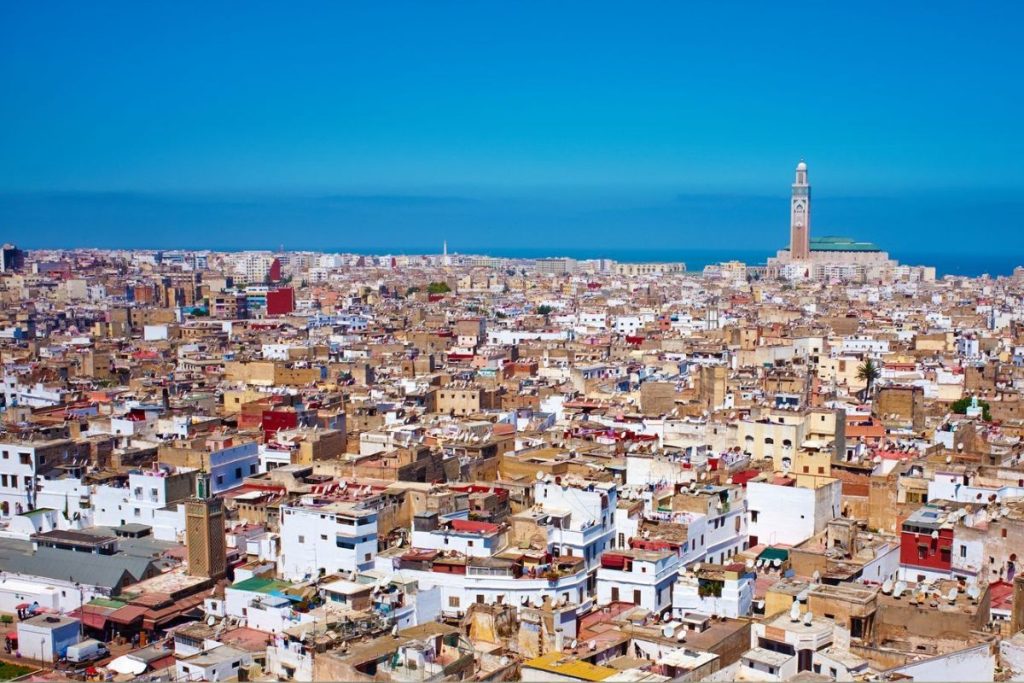
Unlike Morocco’s ancient medinas, Casablanca’s Old Medina dates largely to the 19th century. While much of it remains residential, its compact maze of whitewashed lanes, neighbourhood cafés and everyday shops offers a glimpse of local life rather than a polished tourist experience. Enter through Bab Marrakech or Place des Nations Unies, where the busiest streets are lined with stalls selling olives, spices, pottery and handcrafted souvenirs before giving way to quieter residential alleyways. On the northern edge, don’t miss La Sqala, the last surviving section of Casablanca’s 18th-century fortifications, where the old bastion commands panoramic views across the port and the Atlantic.
4. Off the Beaten Path
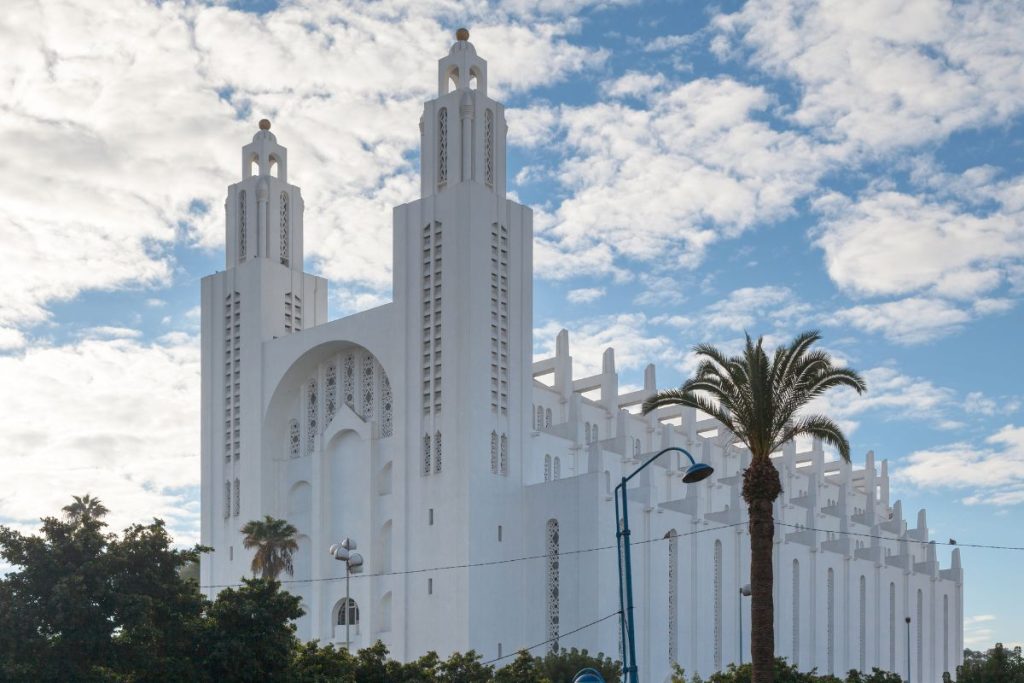
Beyond its headline attractions, Casablanca rewards those who look a little deeper. Architecture enthusiasts should explore the city’s remarkable collection of 20th-century buildings that define its distinctive urban landscape. The best way to appreciate them is on a guided walking tour, taking in landmarks such as the Église du Sacré-Cœur, the Central Post Office, the Palace of Justice and the Art Deco Cinema Rialto. Also worth a visit is Notre-Dame de Lourdes, completed in 1956, whose soaring stained-glass windows by French artist Gabriel Loire bathe the minimalist interior in remarkable light.
WHERE TO EAT & DRINK
Casablanca’s dining scene is one of Morocco’s best-kept secrets. Shaped by its Atlantic coastline, the city celebrates exceptional seafood while embracing everything from traditional riad restaurants and bustling market eateries to contemporary cafés and destination dining. The revitalised Aïn Diab Corniche is the heart of modern Casablanca—a broad oceanfront promenade lined with cafés, gardens and beach clubs that stretches towards the historic El Hank Lighthouse.
For my most memorable meal in Casablanca, there was only one address: Le Cabestan. Celebrating its centenary in 2026, this legendary restaurant has defined Casablanca’s dining scene since 1926. Perched dramatically above the Atlantic, where waves crash against the rocks below, it offers one of the most coveted tables in Morocco. Its refined French cuisine, delicately accented with Moroccan influences, has long attracted royalty, Hollywood stars and international tastemakers.
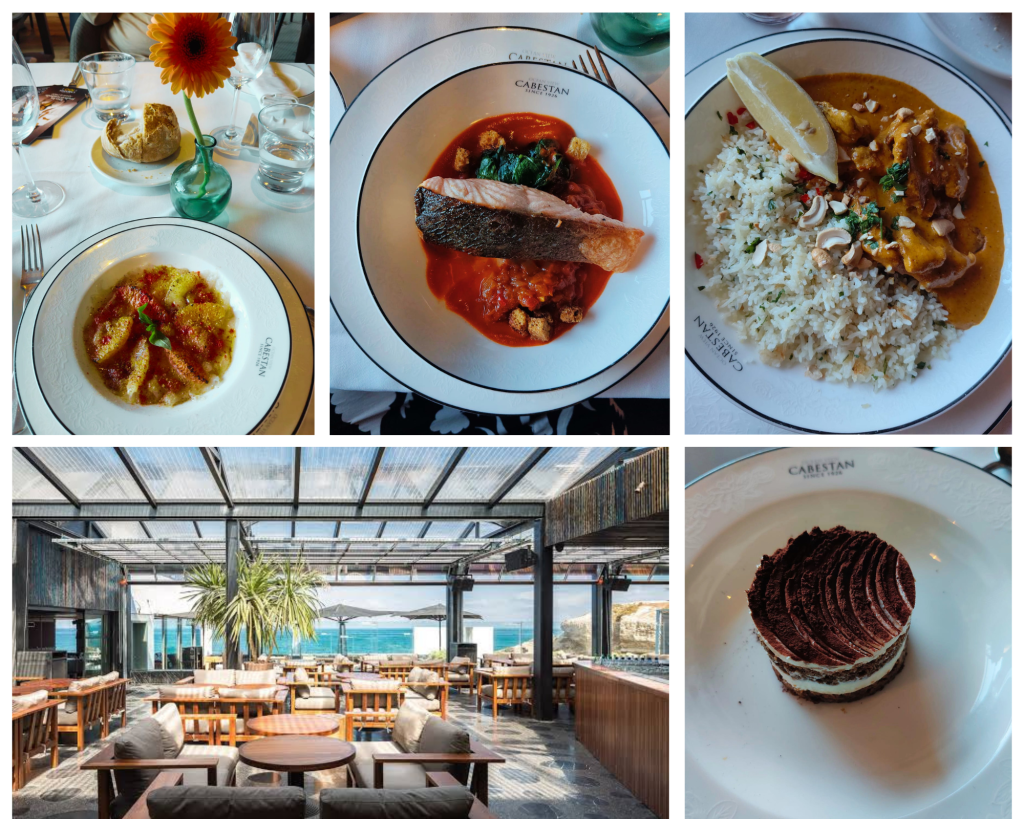
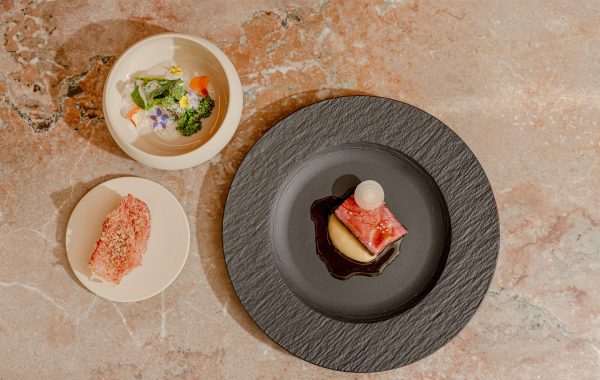
The menu is led by the sea: we began with a beautifully balanced ceviche, followed by perfectly grilled salmon, and ended with a classic tiramisu—light, indulgent and exactly right. But Le Cabestan is not only about seafood; the menu moves effortlessly across continents, and the butter chicken with naan arriving at a neighbouring table looked every bit as tempting. Every plate reflected thoughtful sourcing, flawless execution and the quiet confidence of a restaurant that has spent a century perfecting the art of hospitality.
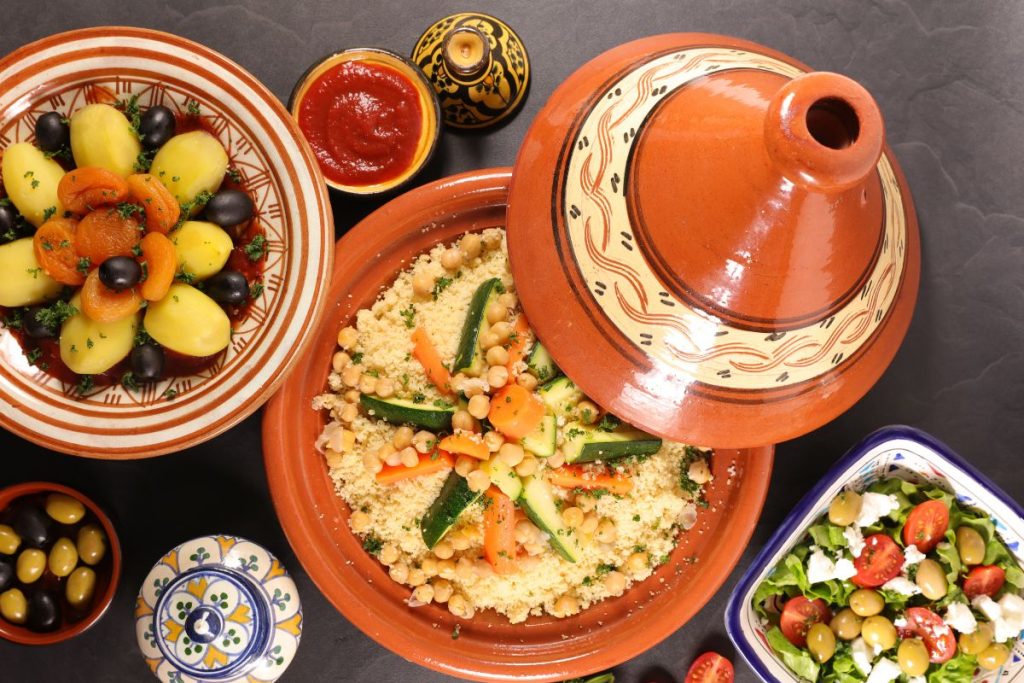
For authentic Moroccan cuisine, head into the Old Medina for dinner at Dar Dada. Hidden behind an unassuming doorway, this beautifully restored riad pairs traditional Moroccan architecture with warm hospitality. Expect vibrant Moroccan salads, flavourful tagines (the slow-cooked North African stew named after the distinctive clay pot in which it is prepared) and beautifully prepared seafood, accompanied by live musicians and dancers that create an atmosphere without overwhelming the meal.
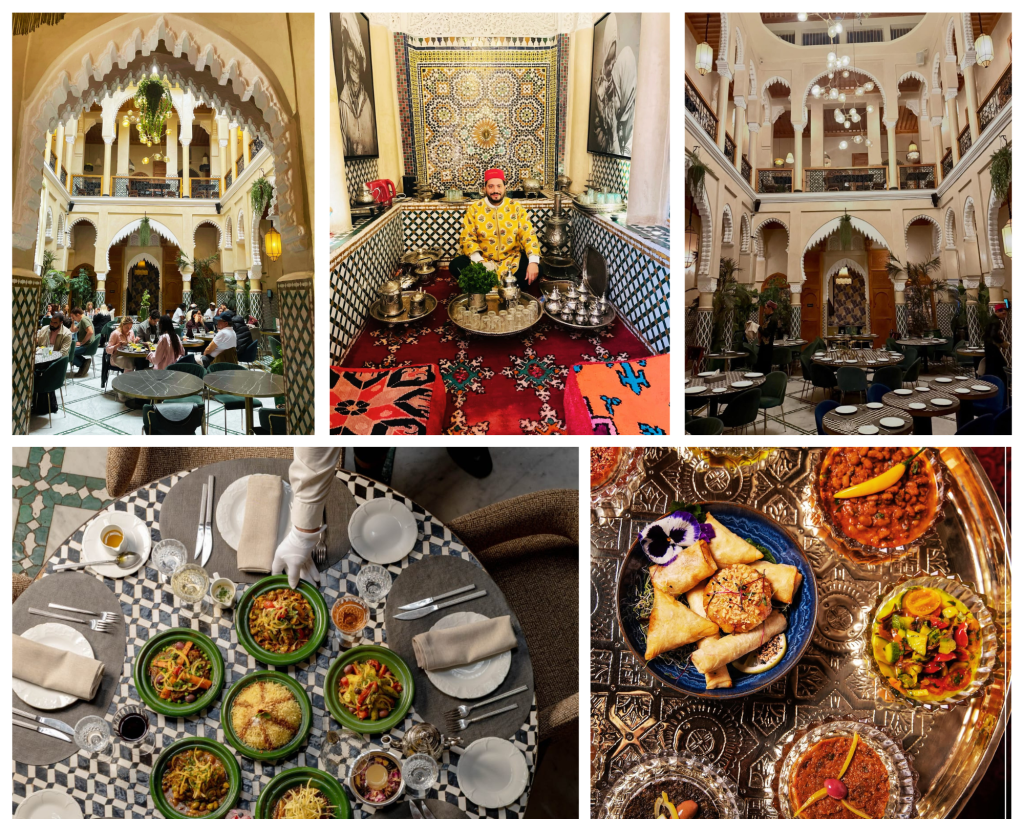
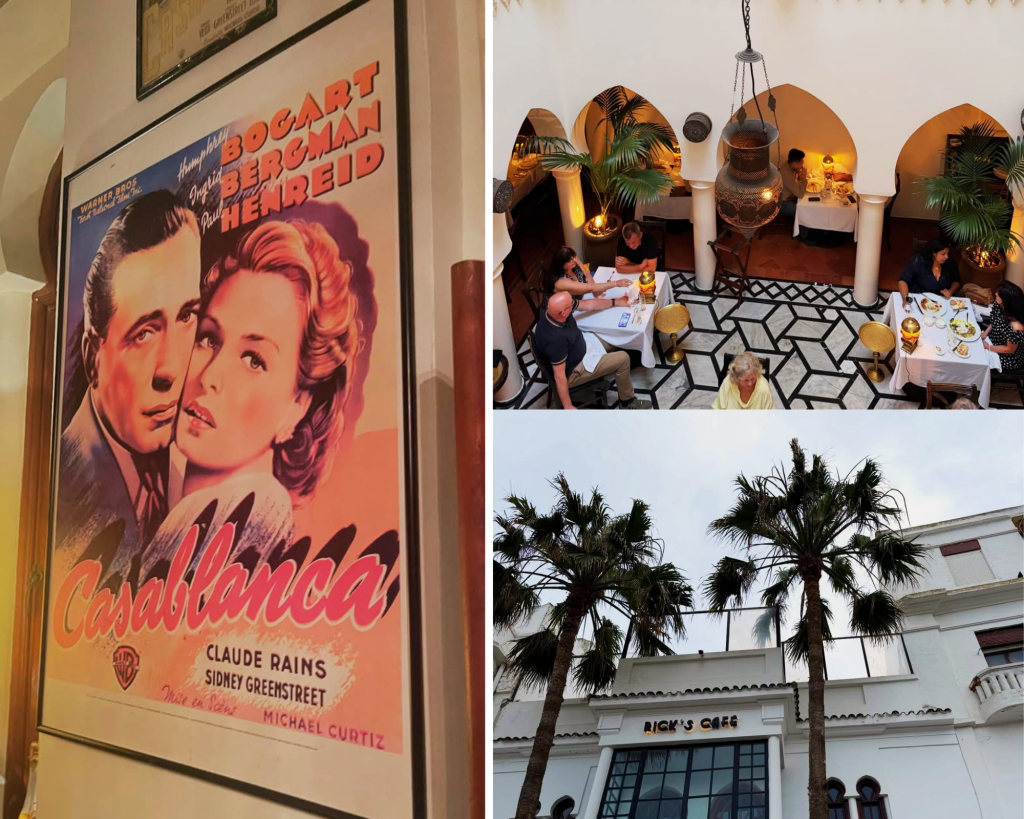
No visit to Casablanca is complete without a drink at Rick’s Café. Inspired by the legendary café from the 1942 film Casablanca, it is not an original film location but a faithful recreation of Hollywood’s most famous fictional bar. Begin with a cocktail in the upstairs lounge as the piano strikes up As Time Goes By, before settling into the elegant courtyard restaurant beneath soaring arches. Whether you stop for oysters and champagne or simply soak up the atmosphere, Rick’s remains one of Casablanca’s most iconic addresses.
Some of the other restaurants worth trying are Le Grande Table Marocaine on the 23rd floor of the Royal Mansour Casablanca, with its stunning views over the city to the sea. A local institution going strong since 1968, La Bavaroise is a classic brasserie a local favourite for oysters, succulent steak frites. There’s also an impressive wine cellar, and down in the basement a secret speakeasy, La Bodega, where you can head for late-night dancing after your meal. Cafe de France is a historic café situated in the heart of Casablanca’s Place des Nations Unies. Established over a century ago during the French colonial era, it has long served as a cultural landmark. The café offers a variety of Moroccan pastries and beverages, including msemmen, harcha. With both indoor and outdoor seating, patrons can enjoy people-watching while sipping their drinks. The café retains a nostalgic charm, making it a favored spot for both locals and visitors.
Other notable dining addresses include La Grande Table Marocaine, perched on the 23rd floor of the Royal Mansour Casablanca, where refined Moroccan cuisine is served alongside sweeping views across the city to the Atlantic. For a taste of old Casablanca, head to La Bavaroise, a beloved brasserie that has been a local institution since 1968, renowned for its oysters, excellent steak frites and impressive wine cellar. For a slower pace, settle into Café de France on Place des Nations Unies. A Casablanca landmark for over a century, it’s the perfect place to linger over a coffee or fragrant mint tea, accompanied by freshly baked msemmen or harcha, while the city drifts by.
Casablanca also has an excellent selection of Indian restaurants for travellers craving familiar flavours. Among the city’s favourites are Clay Oven, Bollywood Masala, India Palace and Bombay Palace, serving everything from aromatic biryanis to rich North Indian curries and freshly baked naan.
WHERE TO STAY
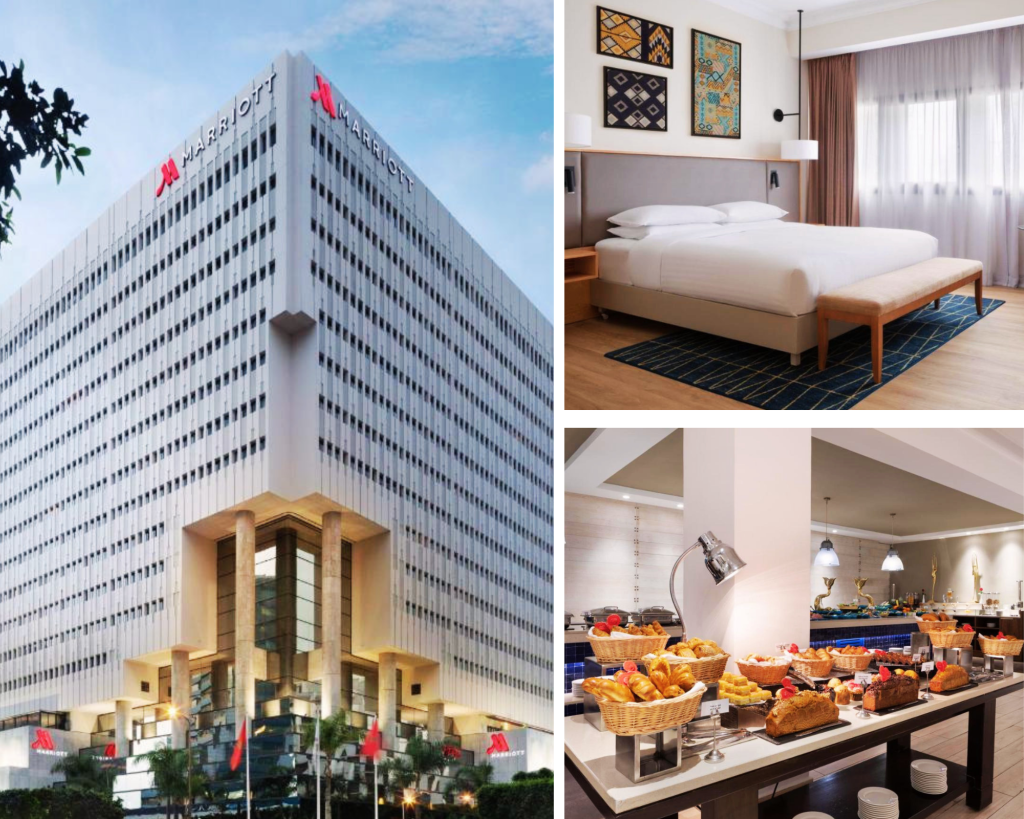
Casablanca’s finest luxury hotels are clustered around the city centre and the Atlantic waterfront at Aïn Diab, offering a choice between urban sophistication and ocean views. During my stay, I checked into the Casablanca Marriott Hotel, an elegant five-star retreat in the heart of the city, where spacious contemporary rooms, an excellent breakfast and polished service provided the perfect base for exploring the Medina and Casablanca’s major landmarks. For those seeking an even more indulgent stay, the newly restored Royal Mansour Casablanca brings together 1950s glamour, impeccable butler service and a collection of outstanding restaurants, while the Four Seasons Hotel Casablanca, overlooking the Corniche, remains the city’s premier beachfront address, with many rooms enjoying uninterrupted views of the Atlantic.
BEST TIME TO VISIT
Casablanca is a year-round destination, thanks to its mild Atlantic climate. Even in winter, daytime temperatures rarely fall below 13°C while summer is tempered by refreshing ocean breezes, with August averaging a pleasant 23°C. Most international visitors exploring Morocco choose to visit between March and June or September and November, when the weather is ideal for combining Casablanca with destinations such as Rabat, Fes, Chefchaouen, Merzouga, and Marrakech.
HOW TO GET THERE
Casablanca is Morocco’s main gateway for many long-haul travellers, with Mohammed V International Airport serving as a convenient starting point for journeys across the country. There are currently no direct flights from India, but one-stop connections are easy from Mumbai, Delhi and Kolkata. Popular options include Etihad via Abu Dhabi, Qatar Airways via Doha, British Airways via London, Air France via Paris, Emirates via Dubai and Gulf Air via Bahrain.
GETTING AROUND IN CASABLANCA
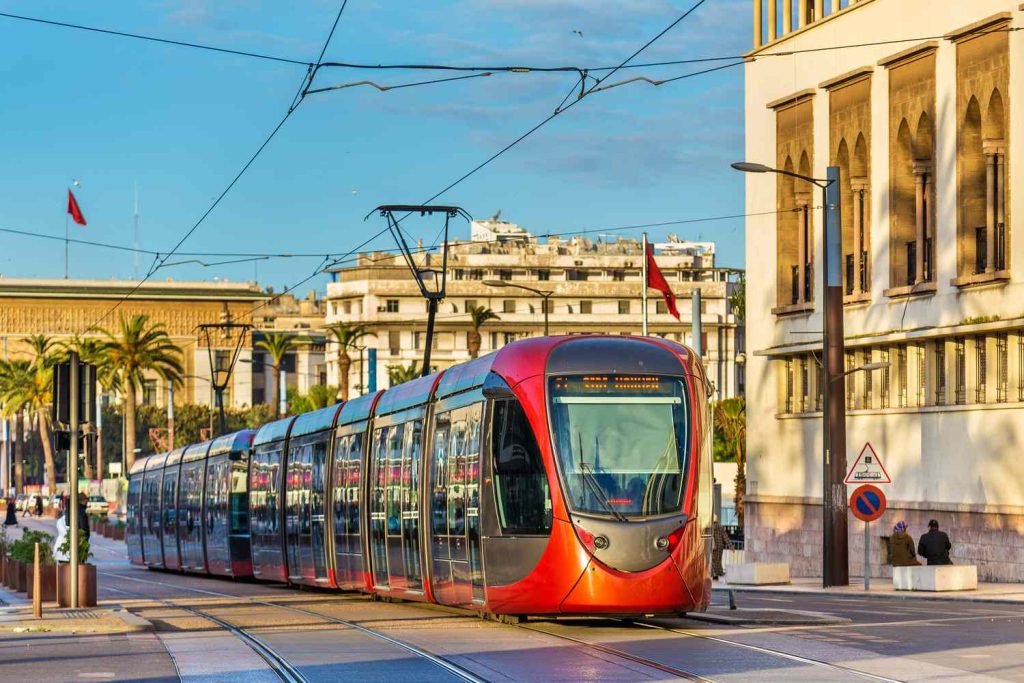
From Mohammed V International Airport, the easiest way into Casablanca is by train or taxi. Trains run from inside the airport terminal and reach Casa Oasis, Casa Voyageurs or Casa Port in around 35–45 minutes. A taxi into the city typically costs Dh300–Dh400 depending on your destination and time of travel. Within Casablanca, the CasaTramway and CasaBusway are reliable, frequent and affordable, with single fares usually around Dh5–Dh8. For shorter journeys, use the city’s licensed red taxis, which are shared taxis for up to three passengers, or book a ride through Careem.
Twenty-four hours was never going to be enough to understand Casablanca. Yet somewhere between the Atlantic sunsets, quiet Art Deco boulevards, unforgettable meals and the warmth of its people, the city quietly won me over. It’s a city I would happily return to, not because I missed anything, but because I know there’s so much more still waiting to be discovered.
For latest travel news and updates, food and drink journeys, restaurant features, and more, like us on Facebook or follow us on Instagram. Read more on Travel and Food Network
Related Content
Best of Morocco | 11-Day Luxury Tour Package
What To Eat in Morocco: 10 Must-Try Local Dishes

A New Yorker at heart, an unapologetic anglophile, national parks explorer and former head of National Geographic publishing in India, Ritika is the Global Editor for Travel and Food Network and leads all journalism across platforms, including news, digital, videos, and social media. She writes features focused on narrative storytelling, industry trends, destinations, culinary travel, and how-to advice and is an advocate for sustainable travel. You can follow her on Instagram @newyorkeratheart