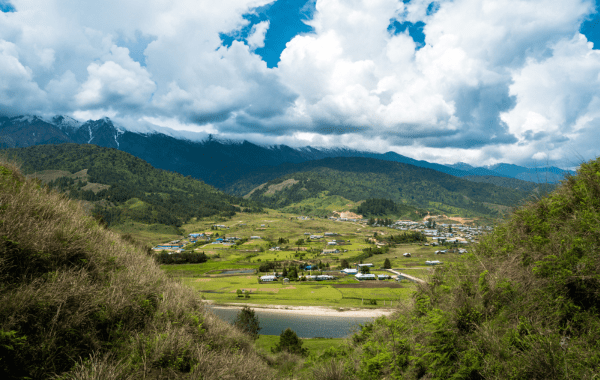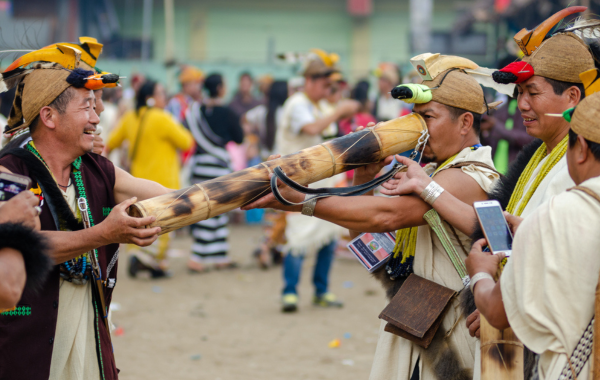




From ancient ruins and forgotten kingdoms to sacred rivers and wartime echoes, Arunachal Pradesh reveals a heritage that is as layered as its landscapes.
In Arunachal Pradesh, heritage isn’t just about old monuments—it’s something you feel all around you. Long before it appeared on modern maps, this region was part of stories from the Mahabharata and the Kalika Purana, where sages, kings, and divine moments played out against forests and sacred hills. It’s believed that Parshuram came here seeking redemption, Vyasa found moments of peace, and King Bhishmaka once ruled these lands—his daughter Rukmini’s story forever linked with Lord Krishna.
Travel through Arunachal today, and these stories don’t feel distant. The stone ruins of Malinithan still stand quietly, echoing the artistry of the Chutia kings, while Bhismaknagar offers a glimpse into an ancient kingdom. And at Parshuram Kund, pilgrims continue to gather each year, drawn by faith and the promise of renewal. Here, heritage isn’t locked away—it’s still very much alive.
To understand this living heritage more closely, you have to step into the places where these stories still linger—quietly etched in stone, ritual, and memory.
MALINITHAN
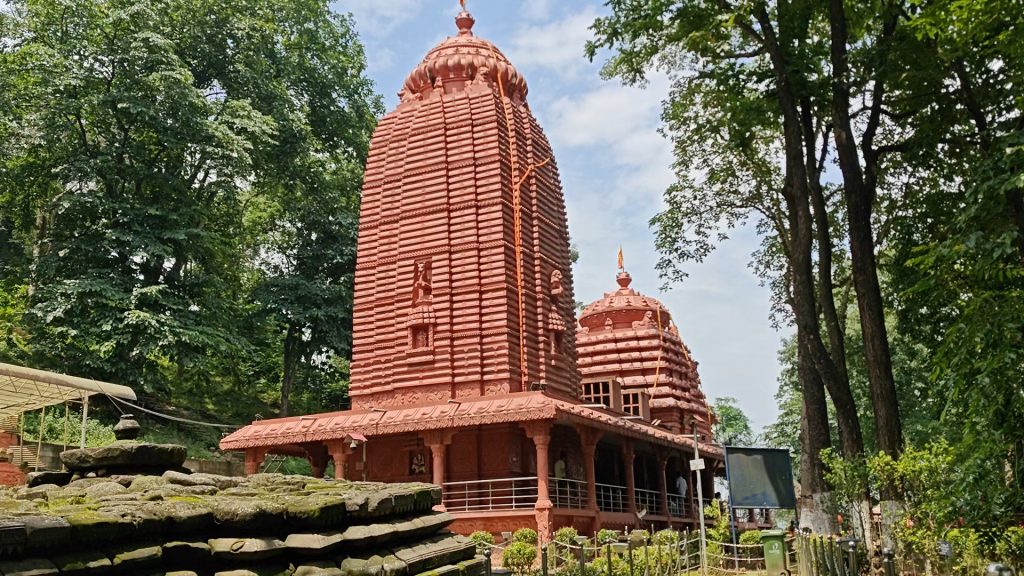
Set quietly at the foothills of the Siang mountains, Malinithan feels less like a ruin and more like a story paused in time. Perched above the plains near Likabali, with sweeping views of the Brahmaputra below, this early medieval temple complex reveals a chapter of Arunachal Pradesh’s layered past. Built in granite by the Chutia kings between the 13th and 14th centuries, the site reflects a period when Hindu influences were taking root across the region, often supported by land grants to Brahmin communities.
What makes Malinithan especially intriguing is the blending of belief systems. Alongside classical temple architecture, there are strong echoes of indigenous traditions—most notably the worship of Kechai-Khaiti, a powerful tribal goddess associated with the site. Nearby flows a slender stream known as Akashiganga, its presence hinting at rituals that once gave the temple a more intense, almost elemental character. Today, what remains are beautifully carved fragments and scattered stone forms—quiet, evocative, and still holding on to centuries of faith and history.
BHISMAKNAGAR
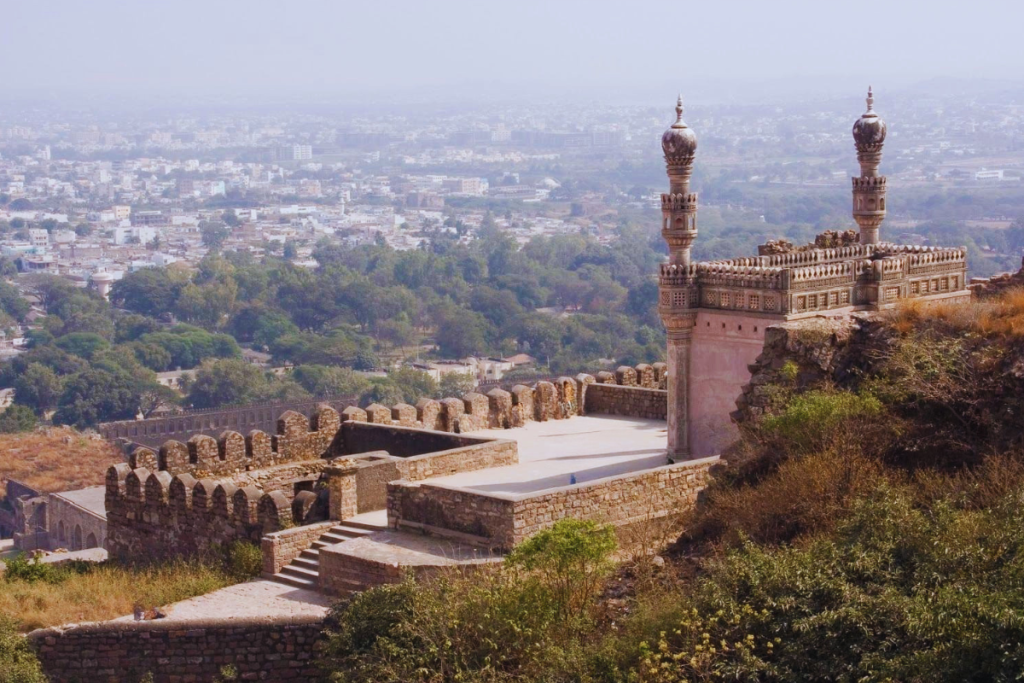
One of Arunachal Pradesh’s oldest archaeological sites, Bhismaknagar sits quietly near Roing, its moss-covered ruins and scattered stone lending it an almost forgotten air. There are no crowds here—just the sense of stepping into a place layered with time and quiet intrigue.
The remains are generally linked to the Chutias, a Bodo-Kachari (Tibeto-Burmese) community that ruled the Sadiya region between the 11th and 16th centuries. What survives today suggests a vast fortified settlement, spread across nearly 10 square kilometres and built using fired bricks and stone. The outer walls—rising about 4.5 metres high and 6 metres wide—run along the east, west, and south, while the Mishmi hills naturally guard the northern edge.
Excavation has been limited, but early findings hint at a structured city, with tanks and gateways marking its layout. At the centre lies a more defined complex of halls, entry points, and inner chambers, enclosed within an additional stone wall. The architecture carries a distinctly medieval character, while discoveries like pottery, terracotta figurines, plaques, and decorative tiles offer glimpses into a past that was both functional and richly detailed.
PARSHURAM KUND
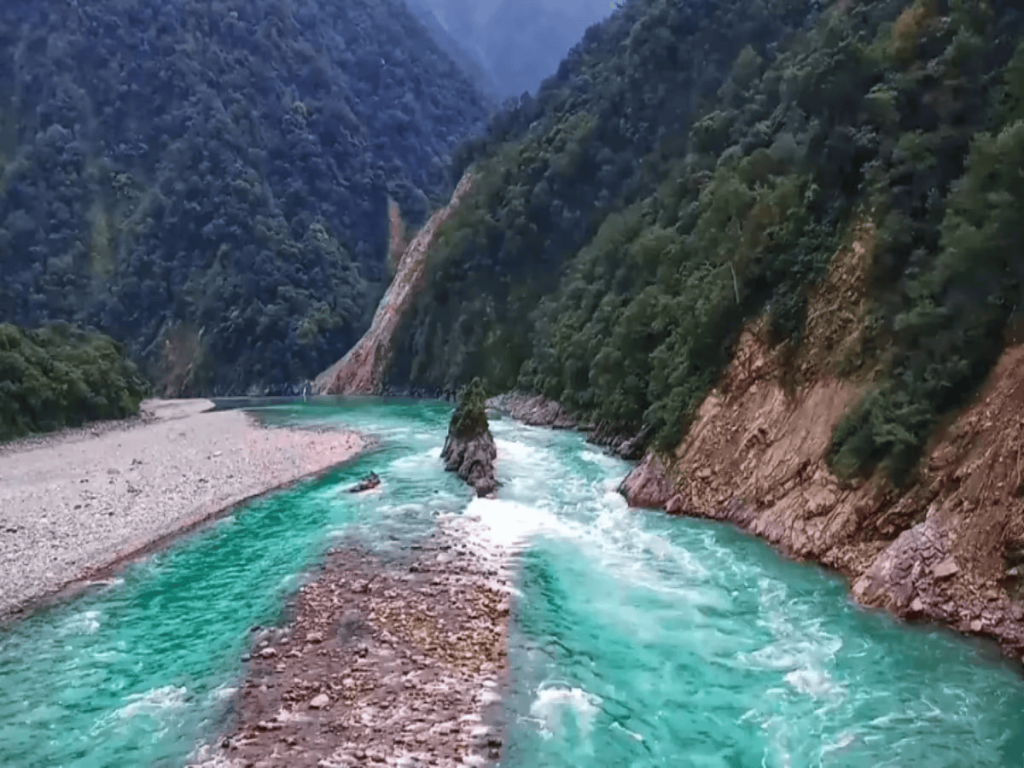
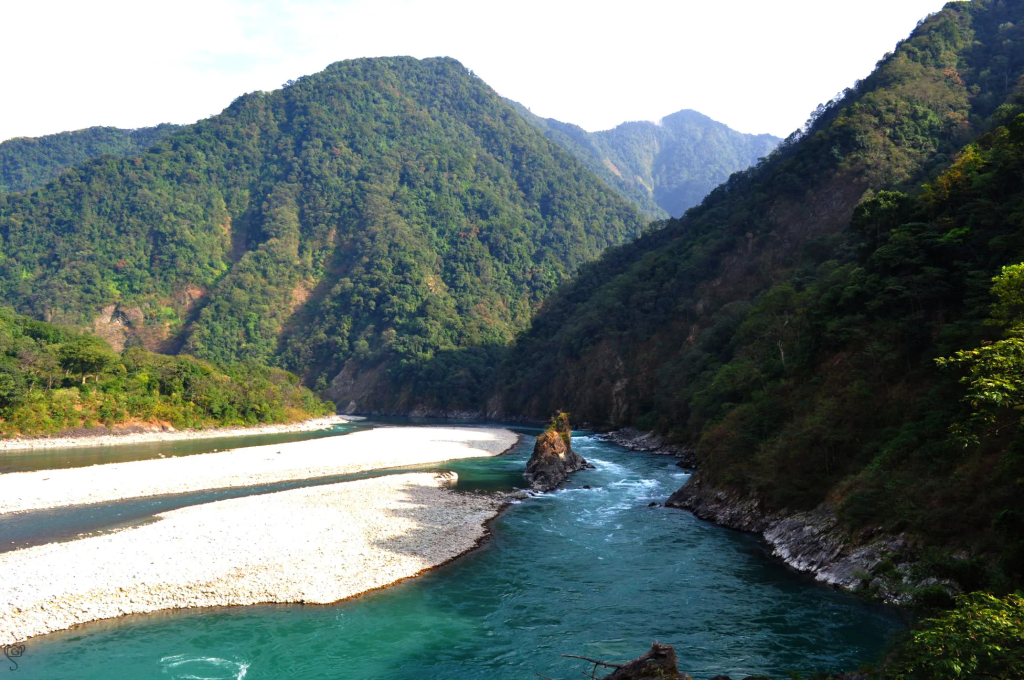
Set on the Brahmaputra plateau along the lower reaches of the Lohit River, about 21 kilometres north of Tezu in Arunachal Pradesh’s Lohit district, Parshuram Kund is one of India’s most revered Hindu pilgrimage sites. Dedicated to sage Parshuram, it draws devotees from across the country, as well as from Nepal, Assam, and Manipur. Each year in January, on the occasion of Makar Sankranti, more than 70,000 pilgrims and sadhus gather here to take a ritual dip in its waters, believed to cleanse sins and offer spiritual renewal.
The kund’s importance is deeply tied to its mythological past. According to local belief, Parshuram, the sixth incarnation of Lord Vishnu, carried out a grave act on the command of his father, Rishi Jamadagni, after which his axe remained fixed to his hand as a symbol of his guilt. Though granted a boon that restored his mother to life, the burden of the act stayed with him. Seeking redemption, he was guided by sages to the banks of the Lohit, where he immersed his hands in its waters. In that moment, the axe is said to have finally fallen away, marking the place as one of purification and release.
Today, Parshuram Kund remains a shrine of national significance, especially during the winter pilgrimage season. While variations of this story are told across different parts of the country—and many temples dedicated to Parshuram exist, particularly in Kerala—this site continues to hold a unique spiritual pull. Pilgrims arrive year after year, and a small community of sanyasis (monks) resides here, quietly tending to the temple and its traditions.
WORLD WAR II CEMETERY
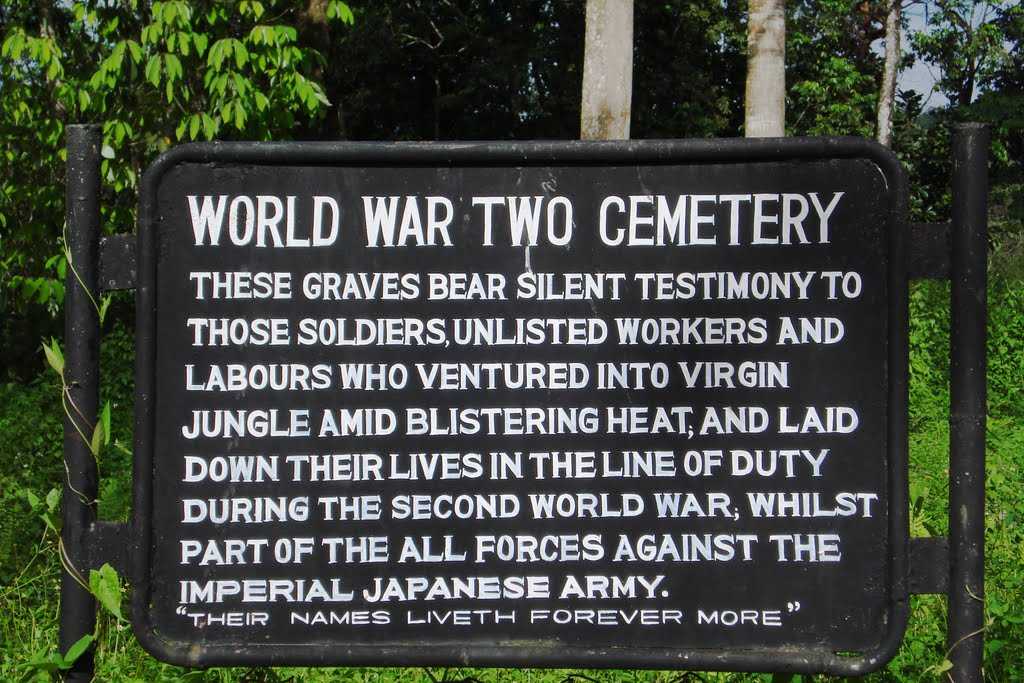
Along the storied stretch of Stilwell Road (Ledo Road), between Jairampur and Nampong in Arunachal Pradesh’s Changlang district, lies a cemetery that feels quietly removed from time. This large burial ground holds close to 1,000 graves of Allied soldiers who died during the Second World War, in the course of resisting Japanese advances across the China–Burma–India (CBI) theatre.
There is no grandeur here—only stillness, a reminder of the human cost behind a distant war that once reached these remote hills. A signboard captures this sentiment with stark clarity: “These graves bear silent testimony to those soldiers, unlisted workers and laborer’s who ventured into virgin jungle amid blistering heat and laid down their lives in the line of duty during the second world war, whilst part of the All Forces against the Imperial Japanese Army.“
It’s a place that doesn’t demand attention, but quietly holds it—through memory, landscape, and the stories left unspoken.
In Arunachal Pradesh, history isn’t something you check off a list—it lingers, unfolding slowly in stories, landscapes, and quiet moments. Long after you’ve left, it’s this sense of time—ancient, layered, and deeply felt—that stays with you.
In Partnership with Arunachal Pradesh Tourism
For latest travel news and updates, food and drink journeys, restaurant features, and more, like us on Facebook or follow us on Instagram. Read more on Travel and Food Network
Related Coverage
Discover The Beauty Of Arunachal Pradesh Through Bird And Butterfly Spotting