From restored flights to renewed partnerships, Israel positions India at the heart of its tourism revival.
At OTM 2026, amid cautious optimism across the global travel industry, Israel’s tourism narrative was one of recovery and renewed ambition. Travel and Food Network caught up with Galit Hoffman, Consul – Tourism Affairs, Israel Ministry of Tourism, to understand how the destination is repositioning itself — and why India remains a priority growth market.
Hoffman began by addressing the key concern shaping traveller sentiment: stability. She noted that the past few months, particularly following the ceasefire, have brought a sense of calm that is already reflecting in travel patterns. “We are seeing tourists coming back to Israel from all around,” she shared, signalling a gradual return of global confidence.
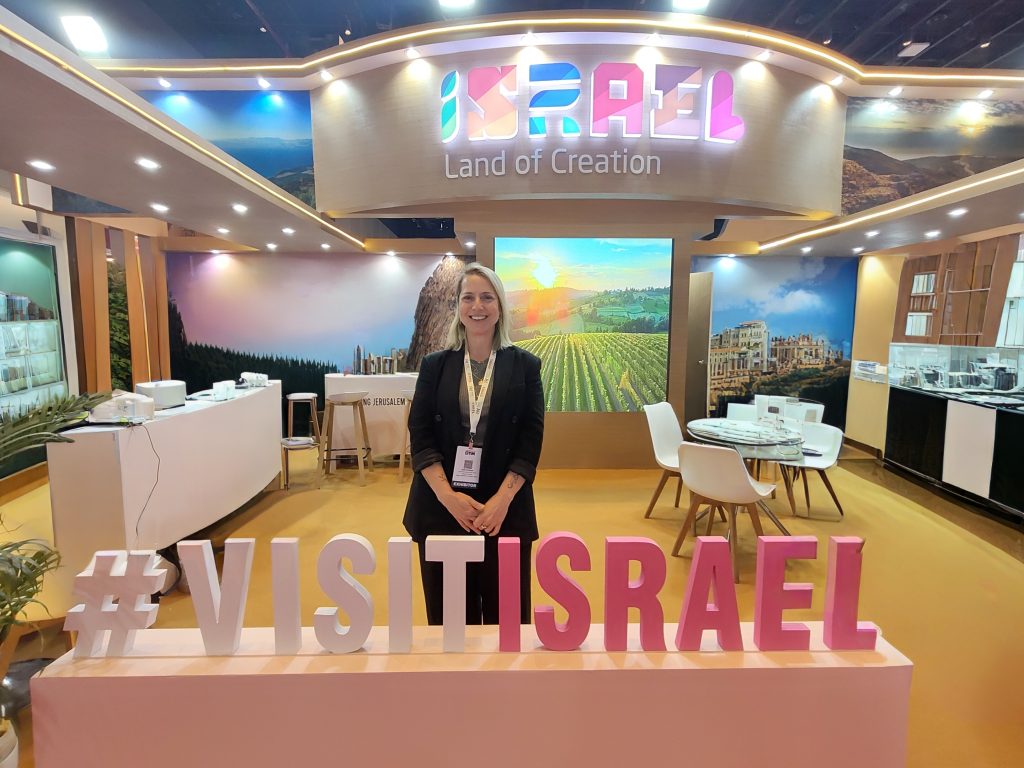
Galit Hoffman, Consul – Tourism Affairs, Israel Ministry of Tourism
Direct Flights Signal Confidence
A major development has been the resumption of direct connectivity. Since January, Air India has restarted non-stop flights from Delhi to Tel Aviv — widely seen as a strong vote of confidence in the destination. The move, according to Hoffman, is critical in rebuilding momentum from India, which has historically been one of Israel’s most promising source markets.
Airlines Eye Wider India Connectivity
Beyond Delhi, interest appears to be widening. Hoffman revealed that both Israeli and international carriers are exploring potential routes from cities such as Mumbai, Bengaluru, Kochi, and Goa. While these plans are still in discussion stages, the interest itself reflects strong underlying demand. The hope is that this intent translates into new connections over the coming year.
Ambitious Targets for the India Market
When asked about numbers, Hoffman was optimistic yet realistic. In 2025, Israel welcomed 13,800 visitors from India, firmly placing the country among its top ten inbound source markets worldwide — and making India the leading source market from Asia. Globally, Israel recorded 1.318 million tourist arrivals during the year. Looking ahead, the Israel Ministry of Tourism is forecasting a strong rebound, with Indian arrivals expected to climb to around 50,000 in 2026. Globally, the benchmark remains pre-pandemic highs. Like many destinations, Israel continues to look at 2018 and 2019 as reference years, even as recovery depends on factors such as budgets, connectivity, and evolving promotional strategies.
“We faced crises like Covid-19 and then the war, which affected our tourism industry. In 2019, we welcomed 65,100 visitors from India. If everything remains positive and we see strong campaigns and promotions like we did then, it could take another year and a half to two years — around 2027 — to reach the 69,000 level,” said Galit Hoffman. Following the global disruption caused by the Covid-19 pandemic, Israel’s tourism sector faced another setback after the October 7, 2023 war with Hamas, which led several international carriers to suspend flights to the country, impacting inbound travel.
Historically, Israel has been synonymous with pilgrimage travel, particularly for Christian groups exploring the Holy Land. But Hoffman believes the narrative is shifting. “The trend has changed,” she observed, pointing to a younger demographic now discovering Israel through a broader experiential lens.
A Destination with Many Layers
And Israel, she argued, has more than enough to support that shift. Beyond its religious heritage, the country is increasingly being rediscovered for its contemporary appeal — Tel Aviv’s nightlife and culinary scene, boutique wineries, beaches, and nature. The real draw, she explained, lies in the juxtaposition: ancient history coexisting with modern urban energy.
Wellness Finds Its Moment
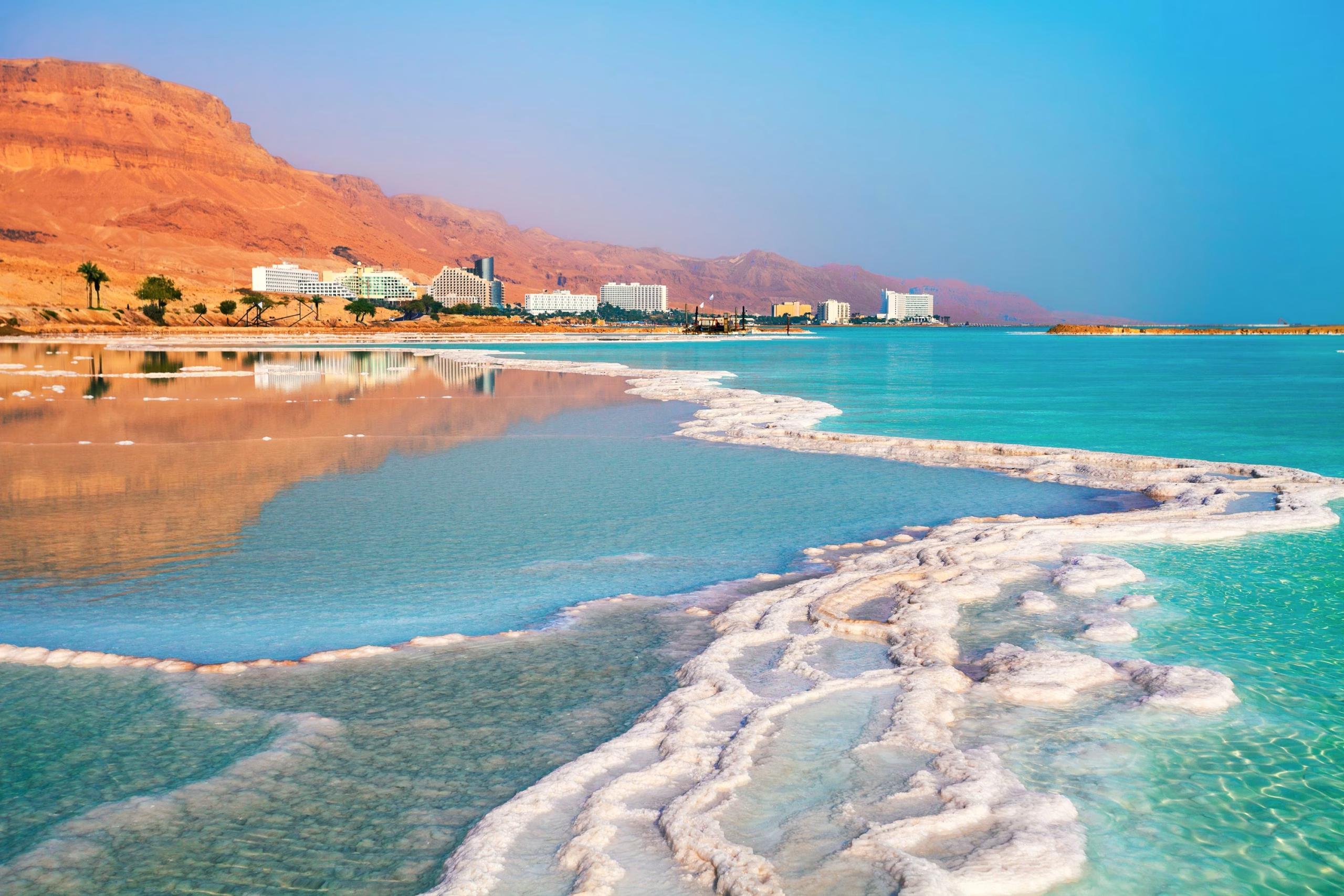
Wellness is another dimension quietly gaining traction. From Dead Sea healing retreats to mineral-rich spa therapies, Israel has long held a reputation for restorative travel, even if it hasn’t always been aggressively marketed as such. Hoffman acknowledged that while wellness experiences exist organically, storytelling is now gradually expanding beyond legacy themes.
Dead Sea.. Photo: Shutterstock
Rebalancing Leisure and MICE
At the same time, segments like MICE (Meetings, Incentives, Conferences, and Exhibitions) are slowly re-entering the conversation. While Israel hasn’t historically needed heavy promotion in this space, the focus is now shifting toward reconnecting with both MICE planners and leisure agents. The broader strategy is to rebalance the tourism mix with MICE and leisure travel for families and couples.
Israel’s E-Visa Makes Family Travel Easier
Hoffman also highlighted Israel’s streamlined visa process, noting that the country offers an e-visa facility with an average processing time of around 10 business days. One standout feature, she explained, is the option of a family e-visa.
“Our e-visa has a very unique feature that allows applications as individuals or families. A primary applicant can serve as the head ID, with four or five additional family members linked under the same application. This makes the process simpler and encourages families to travel together to Israel,” she added.
Israel Focuses on Tier I Cities Before Expanding Across India
On the promotional front, Hoffman noted that Israel is currently focusing its efforts on India’s metro and Tier I cities. While Tier II and III markets continue to generate meaningful outbound traffic, the immediate priority is rebuilding awareness in larger urban centres.
“The bigger cities are our focus right now, but Tier II and III cities also generate a good number of tourists in India. Since we are resetting to pre-Covid levels, we are concentrating on Tier I cities first — promoting and educating travellers about the destination. I believe next year we will definitely expand into Tier II cities,” she added.
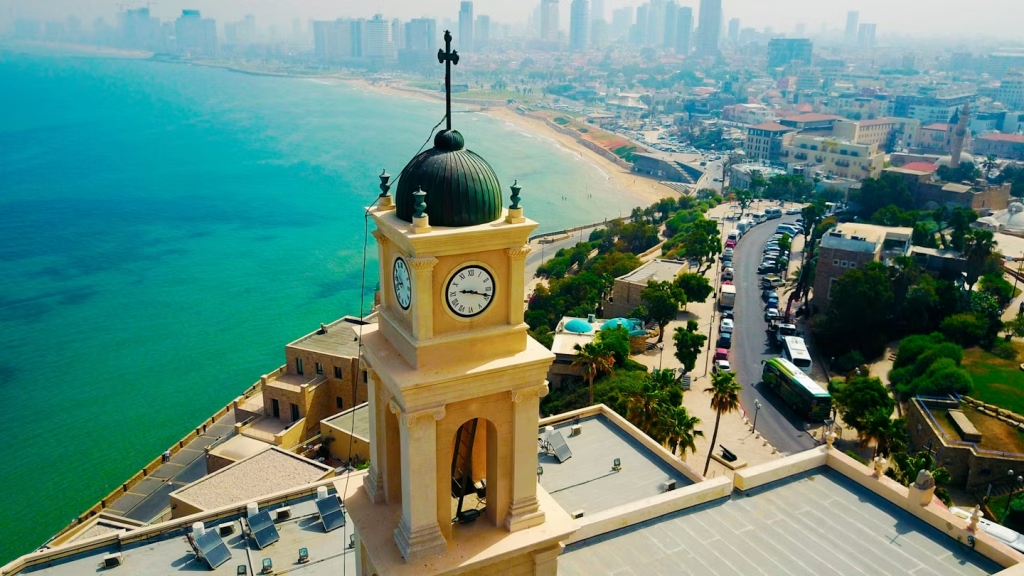
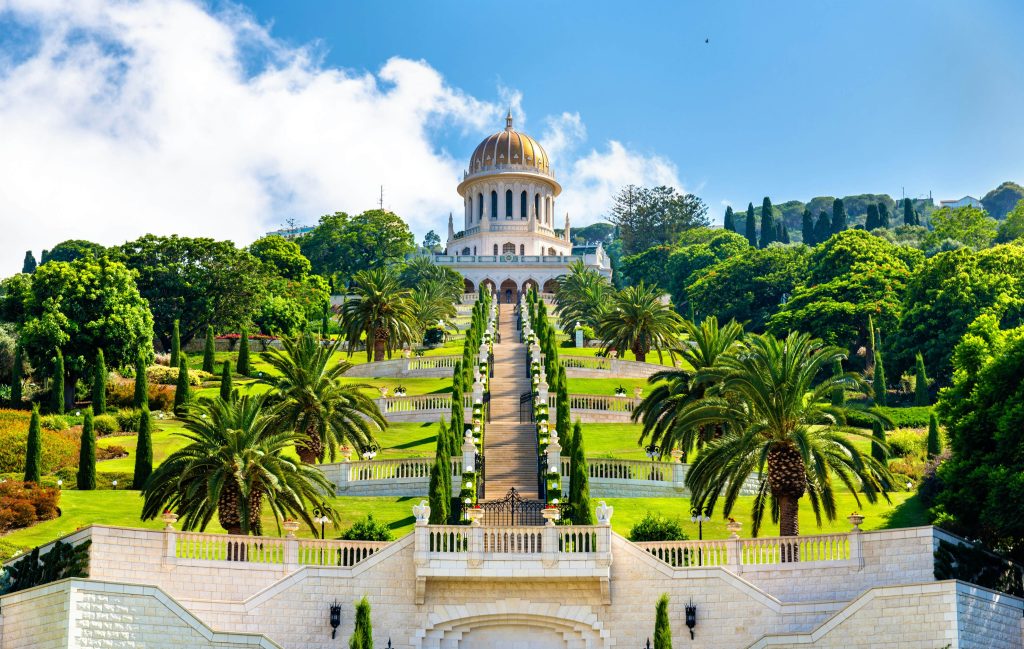
Haifa. Photo: Shutterstock
A Pivotal Moment for Israel in India
If there was one takeaway from the conversation, it was this: Israel’s tourism comeback is being shaped as much by perception as infrastructure. Stability, renewed connectivity, and evolving traveller tastes are converging at a critical moment. For Indian travellers — especially younger explorers seeking both meaning and modernity — Israel is positioning itself not just as a place of pilgrimage, but as a layered, contemporary destination ready to be rediscovered.
A New Bilateral Push for Tourism Growth
In a significant policy move underscoring India’s strategic importance, the Government of Israel has approved a new initiative to deepen tourism cooperation with India, including a dedicated allocation of 4 million NIS by the Israel Ministry of Tourism to expand activity in the market. The plan also aims to advance a bilateral Memorandum of Understanding (MoU) in tourism, subject to parallel support from the Government of India. The initiative is part of a broader push to strengthen India–Israel ties across sectors, with tourism emerging as a key growth pillar. At its core is a proposed tourism MoU between the two countries’ tourism ministries, expected to establish a joint working group focused on policy dialogue, innovation, regulation, and long-term strategy. The group would bring together national tourism bodies, local authorities, airlines, and private stakeholders to explore ways to boost travel volumes and create joint tourism offerings tailored specifically for Indian travellers — particularly across leisure, family, business, and MICE segments.
As connectivity returns and confidence gradually rebuilds, Israel’s tourism recovery appears to be entering a decisive new phase. With direct flights resuming, policy-level cooperation deepening, and a renewed focus on evolving traveller preferences, the destination is recalibrating its India strategy with clarity. For Indian travellers — whether drawn by faith, culture, wellness, or contemporary experiences — Israel is positioning itself not just as a comeback story, but as a destination ready for rediscovery in a changing travel landscape.
For latest travel news and updates, food and drink journeys, restaurant features, and more, like us on Facebook or follow us on Instagram. Read more on Travel and Food Network
A New Yorker at heart, an unapologetic anglophile, national parks explorer and former head of National Geographic publishing in India, Ritika is the Global Editor for Travel and Food Network and leads all journalism across platforms, including news, digital, videos, and social media. She writes features focused on narrative storytelling, industry trends, destinations, culinary travel, and how-to advice and is an advocate for sustainable travel. You can follow her on Instagram @newyorkeratheart