


Lunar New Year — often called the Spring Festival — is one of the world’s most meaningful celebrations, bringing millions together in a shared ritual of renewal. Across continents and cultures, families gather to welcome a fresh beginning, exchanging wishes for prosperity, longevity, joy, and good fortune in the year ahead. The festival follows the lunar calendar, shifting dates annually, and unfolds over a 15-day arc rich in symbolism — from reunion feasts to rituals rooted in centuries of tradition.
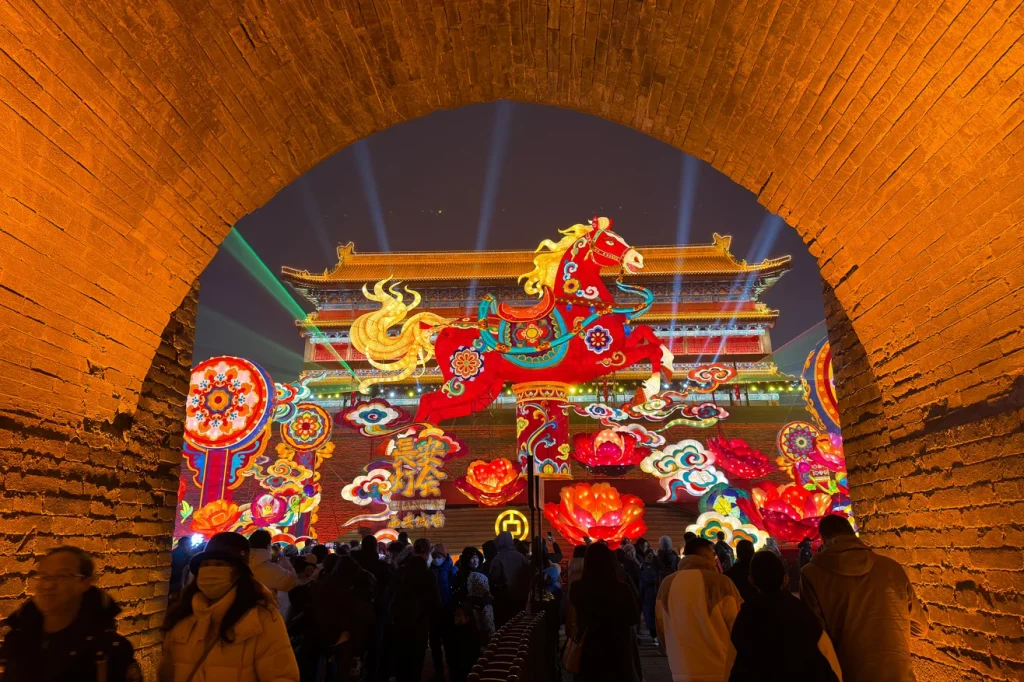
In 2026, the celebrations begin on February 17, Lunar New Year’s Eve, and culminate on March 3 with the luminous Lantern Festival. The opening day marks the Spring Festival itself, while the finale glows with lantern-lit streets and skyward wishes. Each year aligns with one of the 12 zodiac animals in a repeating cycle — and 2026 gallops in as the Year of the Horse, a symbol often associated with energy, freedom, and forward momentum.

Why is it the Year of the Horse?
The Chinese zodiac follows a 12-year cycle, with each year associated with a specific animal in the following sequence: Rat, Ox, Tiger, Rabbit, Dragon, Snake, Horse, Goat, Monkey, Rooster, Dog, and Pig — each believed to shape personality and destiny in subtle, folkloric ways. A person’s zodiac sign is determined not by the Gregorian calendar, but by their birth year within this lunar cycle.
In 2026, newborns will carry the spirited energy of the Horse, often associated with freedom, vitality, and motion. Those born in the preceding lunar year belong to the charismatic Dragon, while babies arriving after the next Lunar New Year in 2027 will step into the gentle, artistic realm of the Goat — the cycle continuing, timeless and unbroken.
The Lantern Festival
The luminous finale of the Spring Festival, the Lantern Festival unfolds on the 15th and final day — falling on March 3 in 2026. Known as Yuan Xiao Jie in Mandarin, it draws the curtain on weeks of Lunar New Year rituals, offering a moment that feels both reflective and celebratory.
At its heart, the festival honours the first full moon of the lunar year — a poetic marker of renewal. The name itself captures the symbolism: “Yuan” meaning beginning, and “Xiao” meaning night. It signals a gentle turning point, bidding farewell to winter and welcoming the promise of spring.
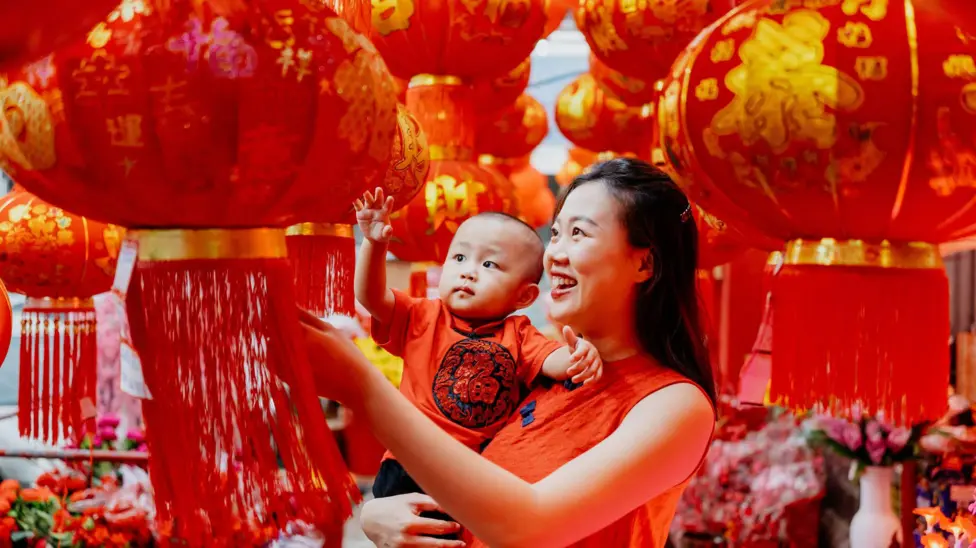
Traditionally, lanterns are lit to banish darkness and invite hope, their warm glow turning streets into rivers of light. In ancient China, the night carried a touch of romance — one of the rare occasions when young women could step out freely, often meeting potential suitors amid lantern-lit promenades. It’s a legacy that has earned the festival the nickname China’s Valentine’s Day.
Today, the tradition has travelled far beyond its origins. From Beijing to Singapore to global Chinatowns, cities host spectacular lantern displays, night markets, and fairs, keeping the festival’s glow alive — a radiant farewell to the Lunar New Year season.
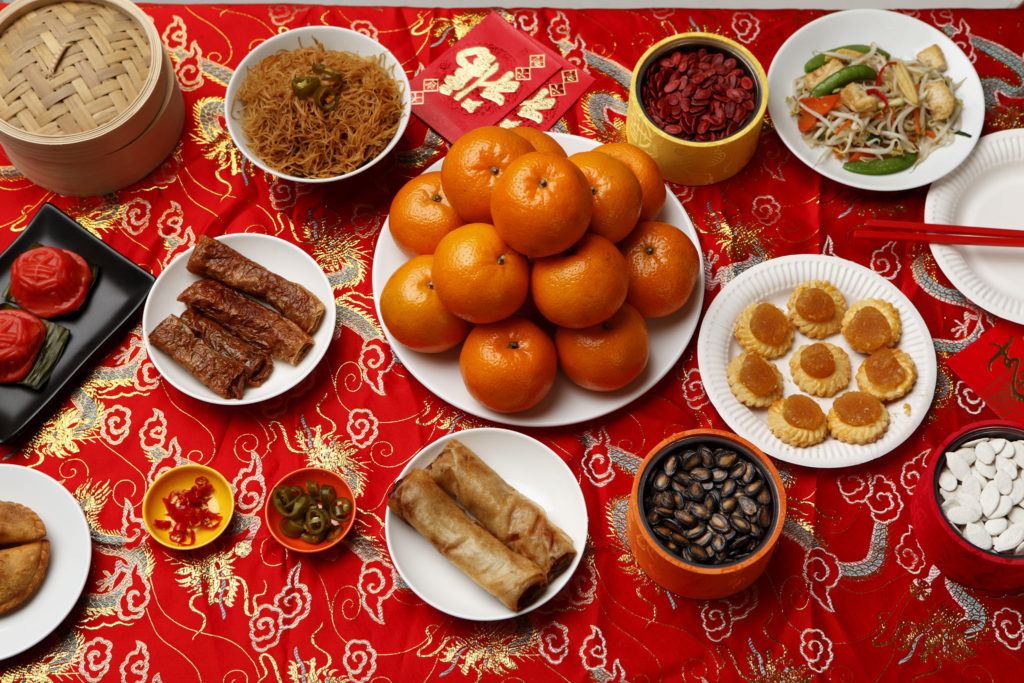
Here are a few symbolic dishes that always grace the dining table during the celebration, so you can ring in the Lunar New Year with the best luck!
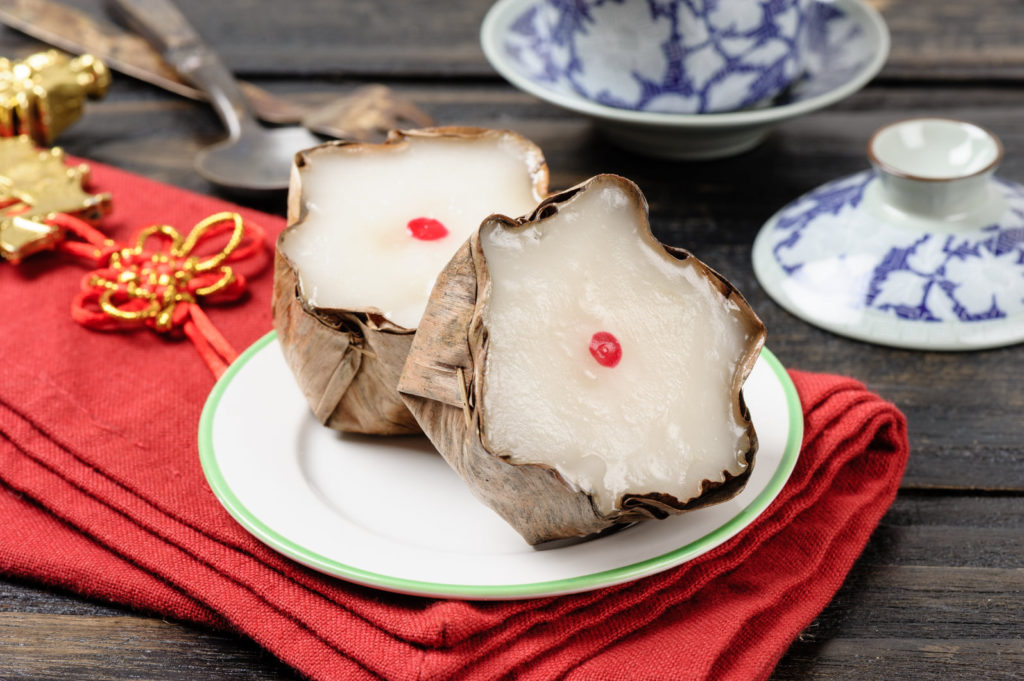
1. Nian Gao: ‘Rising Higher Every Year’ – Southern China
Often translated as “new year cake” or simply “year cake,” Nian Gao is a Lunar New Year staple made from glutinous rice flour, with flavours shifting across regions. In southern China, it leans savoury — sliced, stir-fried, steamed, or slipped into soups. Head north, and the cake turns sweet, perfumed with jujubes, red beans, or brown sugar, each bite carrying a gentle warmth. The symbolism is as meaningful as the flavour. “Nian” means year, while “Gao” suggests height or rising, turning the dish into a hopeful metaphor — a wish that life ascends with each passing year, growing richer, higher, and better than the one before.
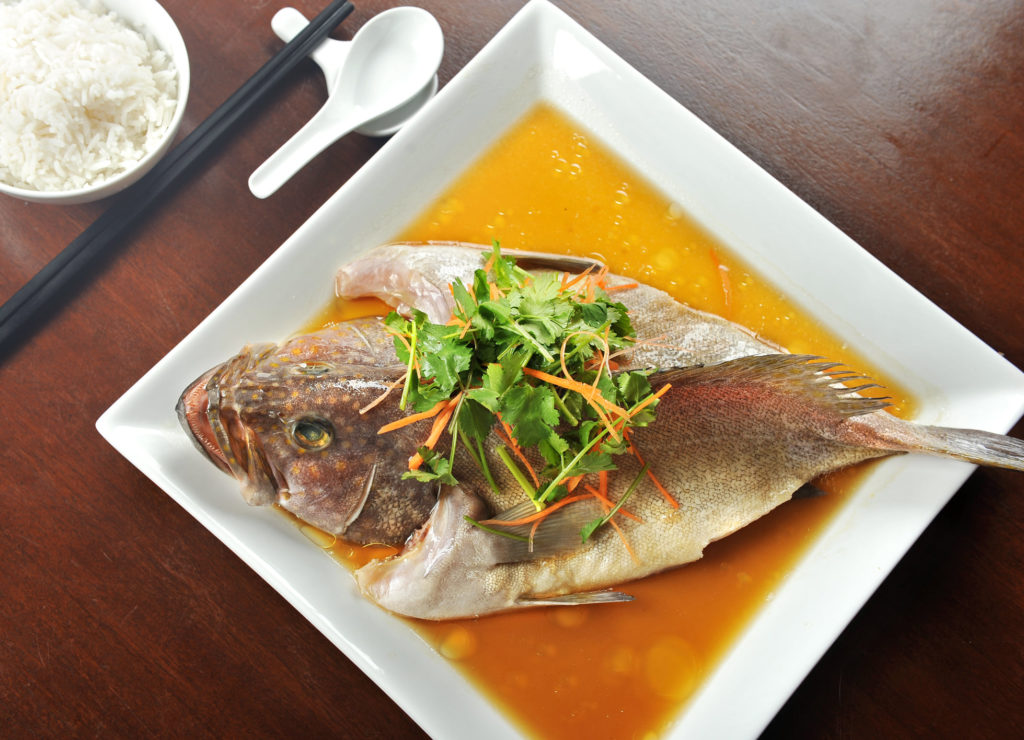
2. Whole Fish: ‘Year After Year of Abundance’ – Mainland China, Hong Kong and Macau
Few Lunar New Year tables feel complete without a whole steamed fish, a dish as symbolic as it is simple. In Mandarin, the word for fish — yu — echoes the word for surplus, turning the ritual into a quiet wish for abundance in the year ahead. Served intact, often delicately steamed with ginger and scallions, the dish celebrates prosperity not in extravagance, but in continuity — a reminder to enter the new year with more than enough, and hope for even more to come.
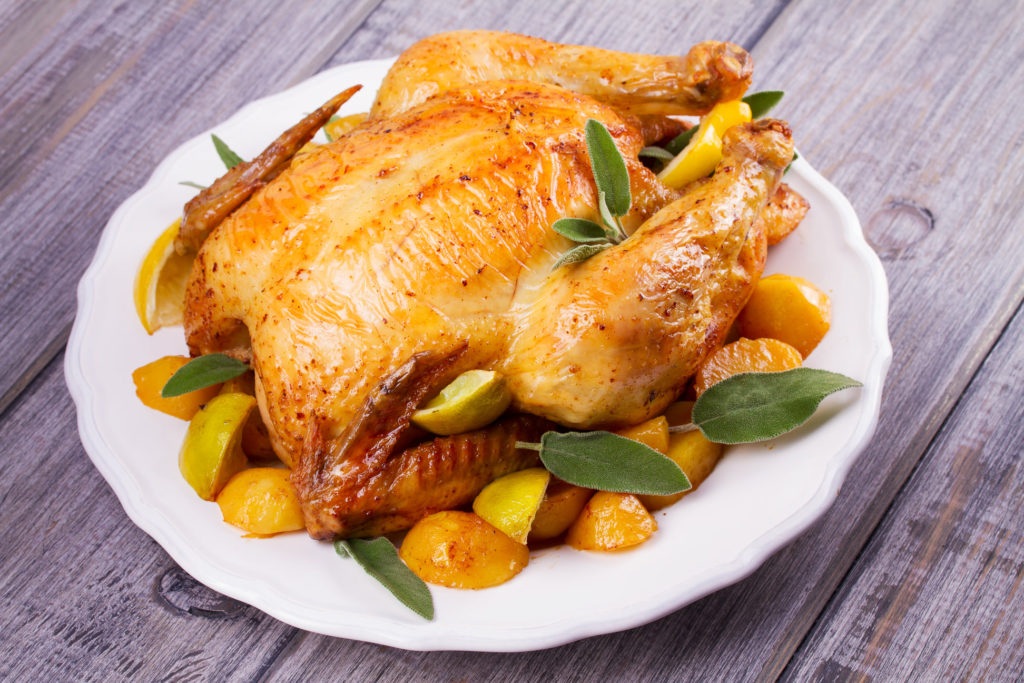
3. Whole Chicken: Symbol of Auspiciousness and Wholeness – Mainland China, Hong Kong and Macau
At the heart of Lunar New Year is reunion — the quiet, powerful act of gathering across generations — and a whole chicken often anchors that sentiment on the table. Presented intact, it symbolizes unity and togetherness, a visual reminder of family bonds that endure beyond the feast. Traditionally, the dish is first offered to ancestors, a gesture of gratitude and reverence, seeking blessings and protection before the celebrations begin.
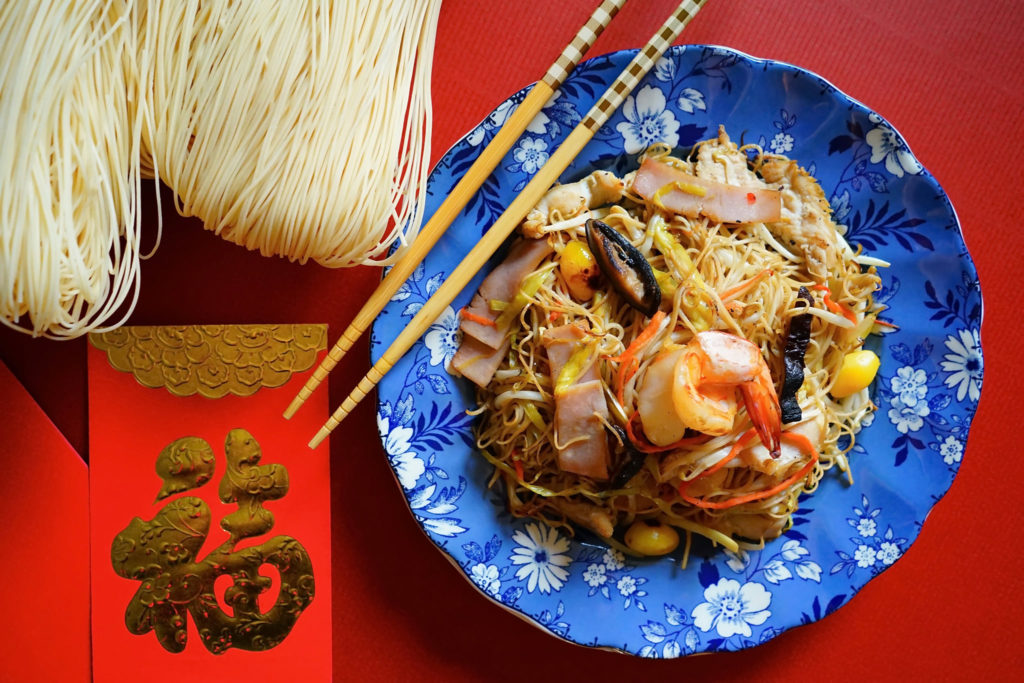
4. Longevity Noodles: ‘Symbol of Prosperity’ – China, South Korea, Vietnam
Noodles are almost mandatory during the new year and other celebrations like birthdays and chang shou mian (or longevity noodles) are a must-have on the dining table for Lunar new year as well. They can be served fried or boiled in broth, along with different meats and add-ins with different meanings. These noodles are left uncut and are meant to be slurped all in one go, rather than chewed. The longer the noodle, the longer your life!
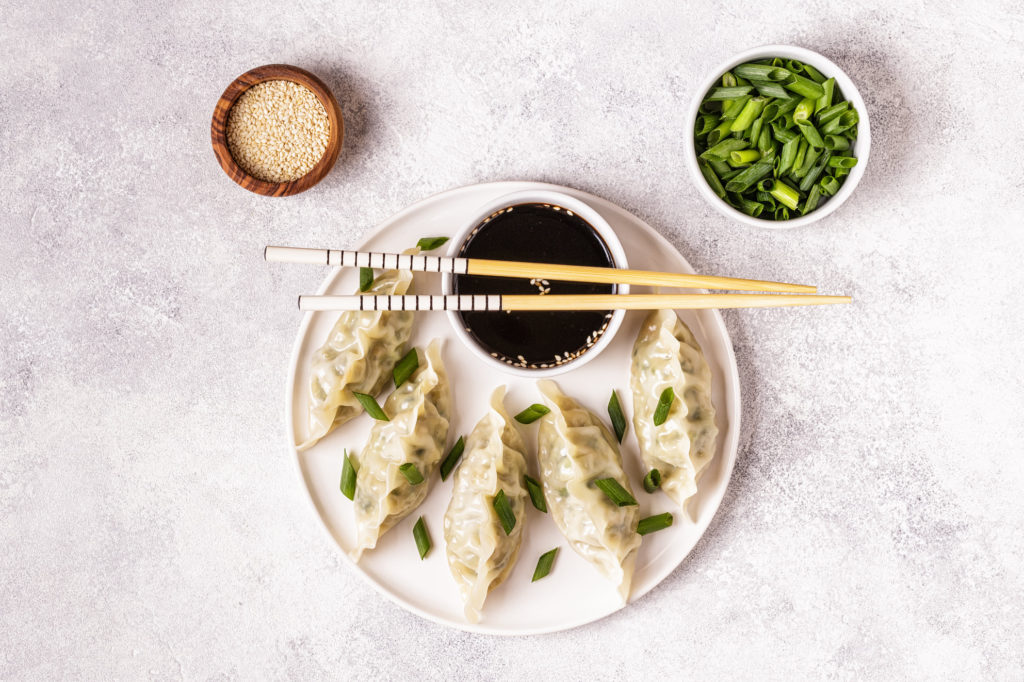
5. Dumplings – Symbol of Wealth and New Beginnings – Northern China, South Korea
We may crave dumplings year-round, but come Lunar New Year, they take on a deeper meaning. The act of making them — folding, sealing, and shaping together — becomes a ritual of reunion, turning kitchens into places of laughter and shared memory. Beyond comfort, they carry symbolism: wealth, unity, and togetherness wrapped in delicate dough.
In northern China, jiaozi are traditionally shaped like ancient gold ingots, a detail that inspires a playful belief — the more dumplings you eat, the more prosperity the new year may bring. In South Korea, their close cousin appears as mandoo, filled with a hearty mix of meat, tofu, vegetables, and noodles, then steamed, boiled, or pan-fried depending on the household. Different folds, same sentiment: abundance shared, one dumpling at a time.
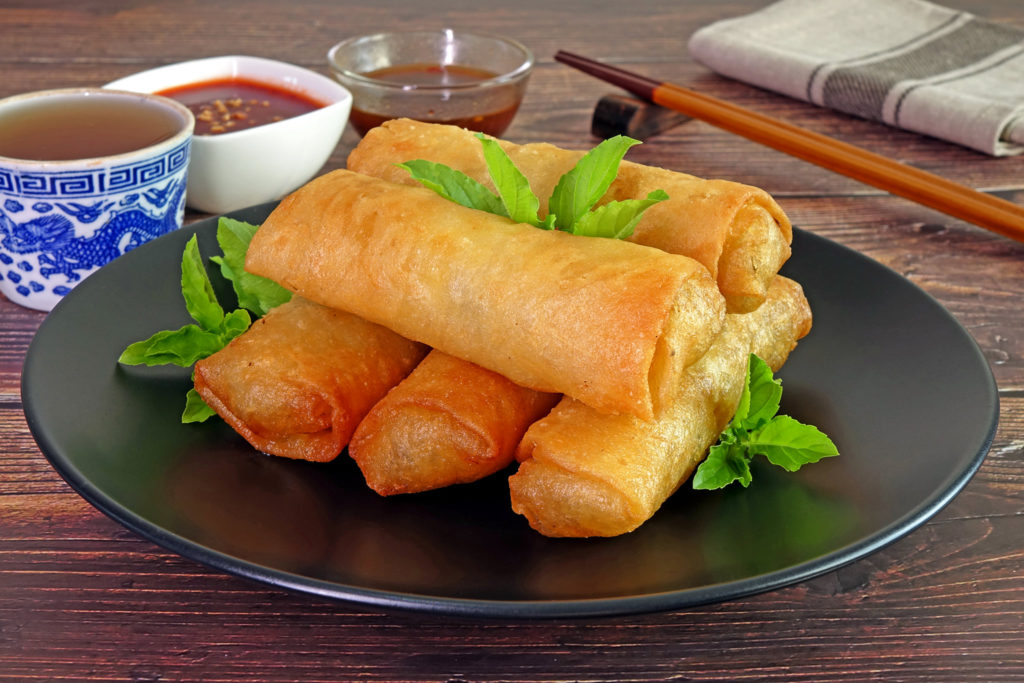
6. Nem Rán (Vietnamese Fried Spring Rolls): Symbol of Prosperity and Reunion – Vietnam
Nem rán, also known as chả giò, are crisp, golden-fried spring rolls filled with minced pork, glass noodles, wood ear mushrooms, and fragrant aromatics. Tightly wrapped and fried until delicately crunchy, they are a beloved staple of Tết celebrations — formally Tết Nguyên Đán, the Vietnamese Lunar New Year. Their cylindrical shape is often likened to gold bars, lending the dish an auspicious meaning tied to wealth and prosperity. Traditionally wrapped in thin dough and fried until golden, these rolls bring both symbolism and irresistible texture to the festive table.
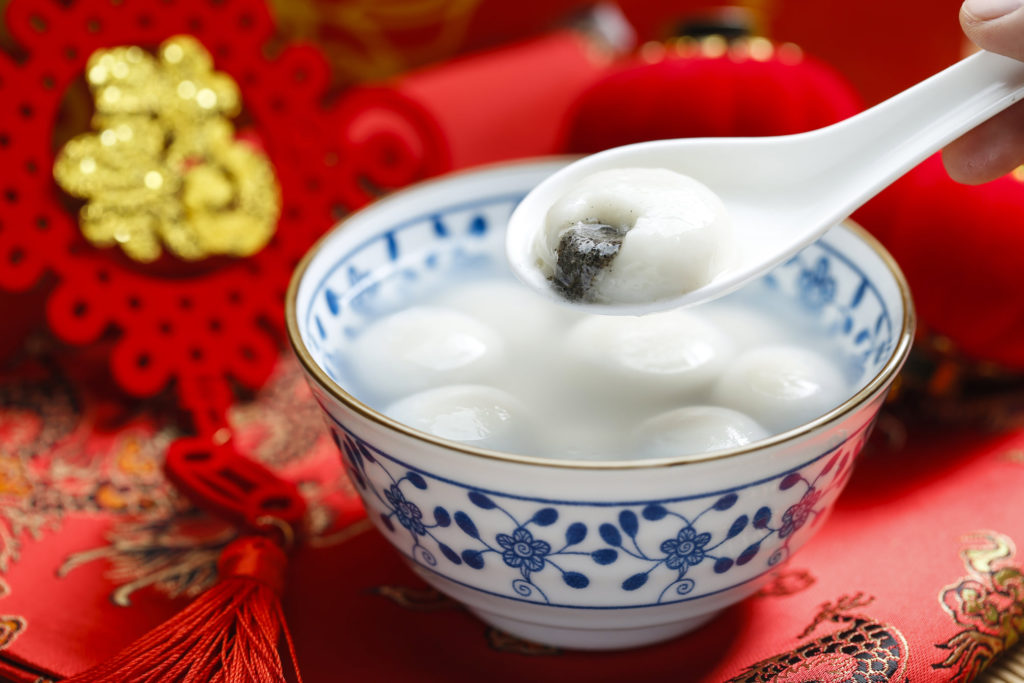
7. Tang Yuan (Rice Balls): Symbol of Reunion and Harmony – Southern China
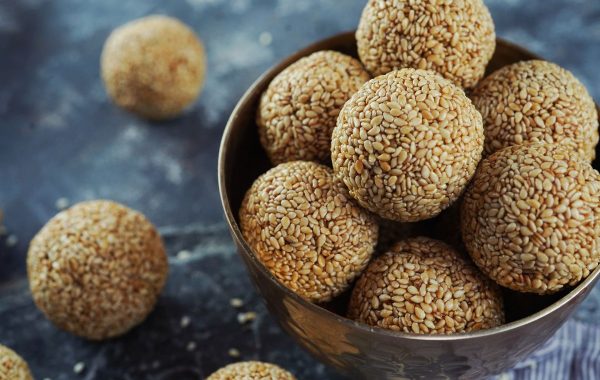
Tangyuan or sweet rice balls, are typically eaten during both the Lantern Festival and the Spring Festival. Their round shape symbolizes family togetherness and completeness. They are made with rice powder and can be filled with a variety of ingredients such as fruit, nuts, brown sugar, and red bean.
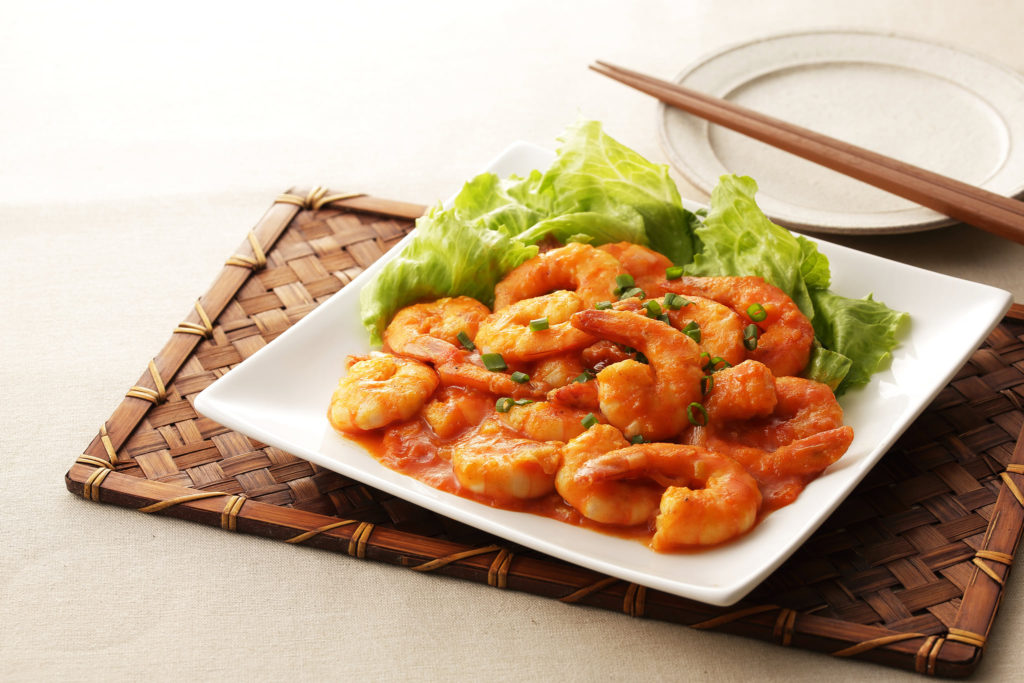
8. Shrimp: ‘Happiness’ – Southern China and Hong Kong
Shrimp — and its more opulent cousin, lobster — are cherished Lunar New Year staples, prized as emblems of fortune and festive indulgence. In Cantonese, the word for shrimp echoes the sound of laughter — ha — lending the dish a joyful symbolism that feels almost playful. Served glistening and celebratory, it’s less about luxury and more about mood: a wish for happiness that lingers, echoing like laughter through the year ahead.
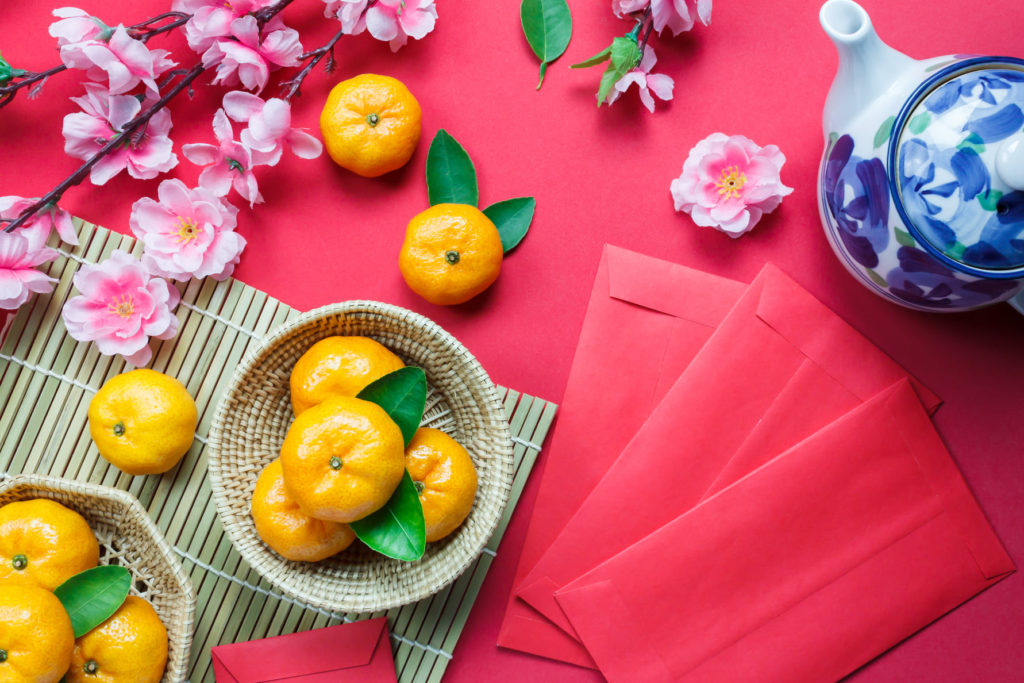
9. Tangerines: ‘Good Fortune’ – South China
Tangerine is the most old-school good fortune fruit there is in Chinese tradition, but you will also spot oranges, pomelos, and other citrus fruits at the table. The name sounds similar to the Chinese words for “luck” and “success,” so they’re often served at the end of a meal or given as gifts to relatives during visits. Their roundness and golden color also signify fullness and wealth. It’s believed that the more you eat during Lunar New Year, the more wealth they’ll bring, so you might want to start peeling those oranges! Enjoy 😊
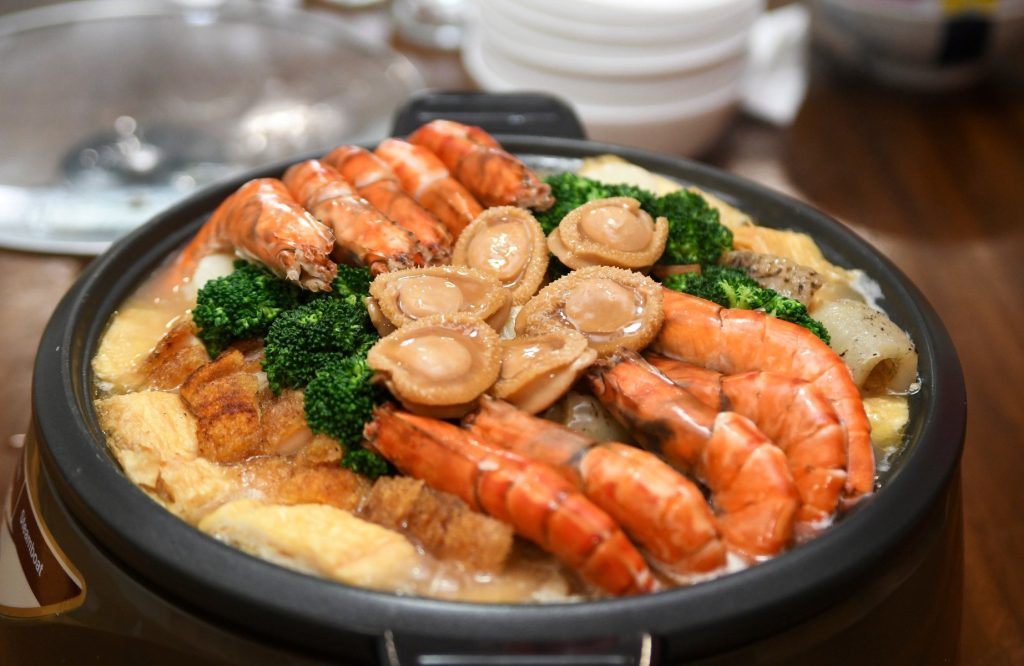
10. Poon Choi: ‘Family Unity and Abundance’ — Hong Kong & Macau
A true centrepiece of Lunar New Year feasts in Hong Kong and Macau, poon choi is a communal dish served in a large basin, its ingredients layered with intention. Braised meats, seafood, and preserved delicacies are stacked rather than mixed, creating a visual tapestry of abundance. Traditionally shared among extended family and eaten from the top down, the dish carries quiet symbolism — each layer distinct, yet part of a unified whole. In essence, poon choi is less a recipe than a ritual, celebrating prosperity through togetherness.
Lunar New Year tables shift subtly across regions, shaped by geography as much as tradition. In northern China, dumplings and long noodles take centre stage — symbols of wealth and longevity. Further south, the feast leans toward steamed rice and seafood, reflecting local climate and coastal culinary heritage.
Beyond China, the celebrations evolve in delicious ways. In Malaysia and Singapore, festivities often begin with the exuberant “prosperity toss” (yusheng) — a vibrant mix of shredded vegetables and raw fish tossed high with chopsticks. The ritual is loud, joyful, and symbolic: the higher the toss, the greater the fortune believed to follow in the year ahead.
This story and the gallery have been updated with new information since its original publish date.
For latest travel news and updates, food and drink journeys, restaurant features, and more, like us on Facebook or follow us on Instagram. Read more on Travel and Food Network
Related Content